
Last updated November 23, 2026
 Sweep & inspection
 Caps & crowns
 Flue relining
 Masonry repair
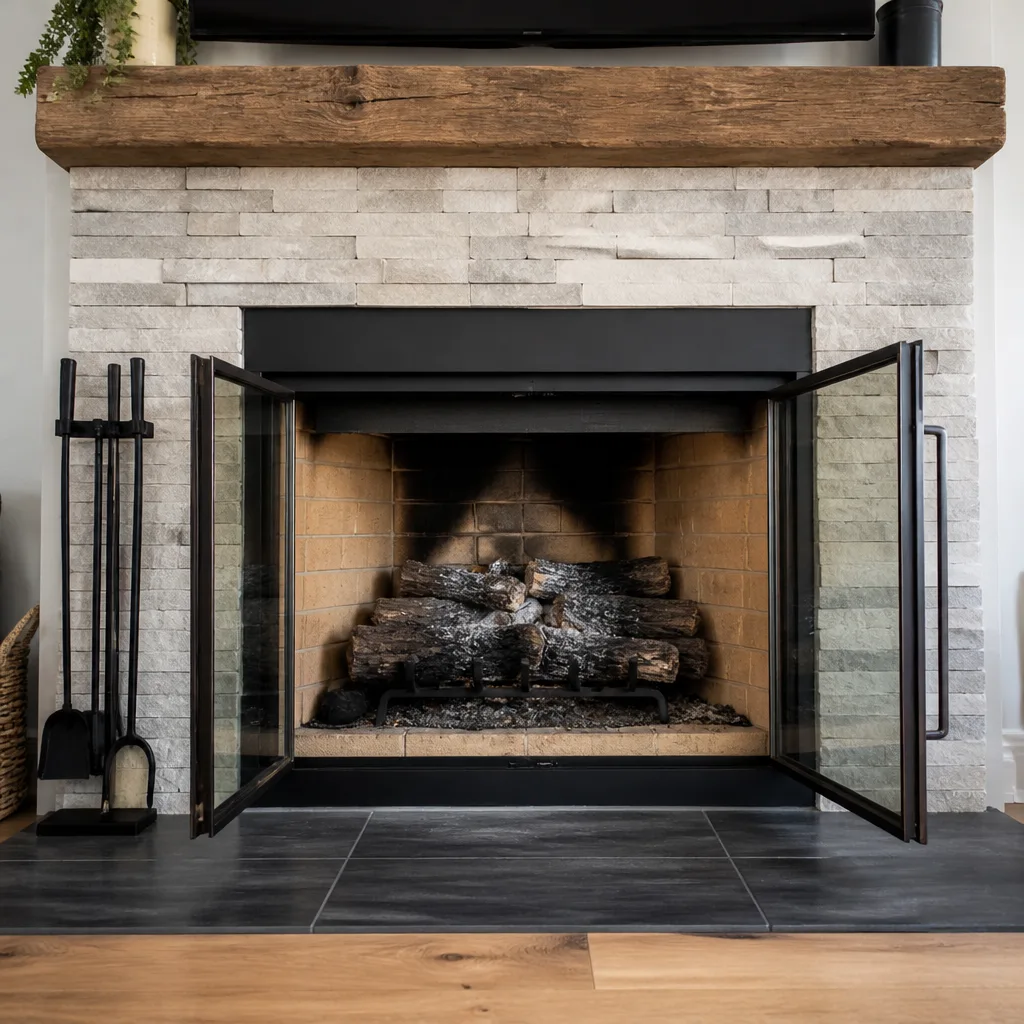 Gas fireplace service
Level 1 sweep and inspection to the NFPA 211 annual standard - flue, crown, cap, and flashing checked and photographed
Chimney sweep logs do not sweep chimneys. They loosen some creosote - which then falls where a brush and vacuum still have to collect it.
Chimney Sweep Maintenance Checklist for Saddle Rock Homeowners
“Inspect annually” is the advice every chimney article gives you, and it’s nearly useless on its own. It tells you when to look but not what you’re looking for, so most homeowners walk outside, glance at the chimney from the driveway, see nothing obviously wrong, and go back inside. The real question isn’t when to inspect. It’s what specific conditions signal a problem and what each one means for your flue, your firebox, and your safety. This guide gives Saddle Rock homeowners a condition-based checklist: what to look for, what it means, and which items you can check yourself versus which require a trained chimney specialist.
Quick Answer
A useful chimney maintenance checklist is organized around what you actually see, not a generic calendar date. Saddle Rock homeowners should watch for three things that justify an unscheduled inspection: freeze-thaw damage after a hard Front Range winter, moisture intrusion during monsoon season, and visible changes on the exterior such as crown cracking, cap damage, or white efflorescence staining. Everything inside the firebox that looks unusual, from spalling firebrick to smoke staining, is worth a professional look.
Styles & brands we work with
- Sweep & inspection
- Caps & crowns
- Flue relining
- Masonry repair
- Gas fireplace service
Table of Contents
- The Exterior Checklist: What You Can See From the Ground
- The Interior Checklist: Reading Your Firebox
- Saddle Rock Seasonal Triggers: Freeze-Thaw and Monsoon
- How to Document Conditions With Photos
- What You Can Check Yourself and What Requires a Professional
- Creosote, Airflow, and the Sweep Itself
- What a Professional Annual Inspection Actually Covers
- Common Mistakes to Avoid
The Exterior Checklist: What You Can See From the Ground
Most of the early warning signs of chimney trouble are visible without a ladder, and looking from the ground is the only exterior inspection we ever recommend for a homeowner. Standing at the base of the house, ideally with binoculars, you can observe the crown, the cap, the flashing, and the masonry without putting yourself at risk. What you’re looking for is change: something that looks different from last season.
Walk these checks in order each time you do a look-over:
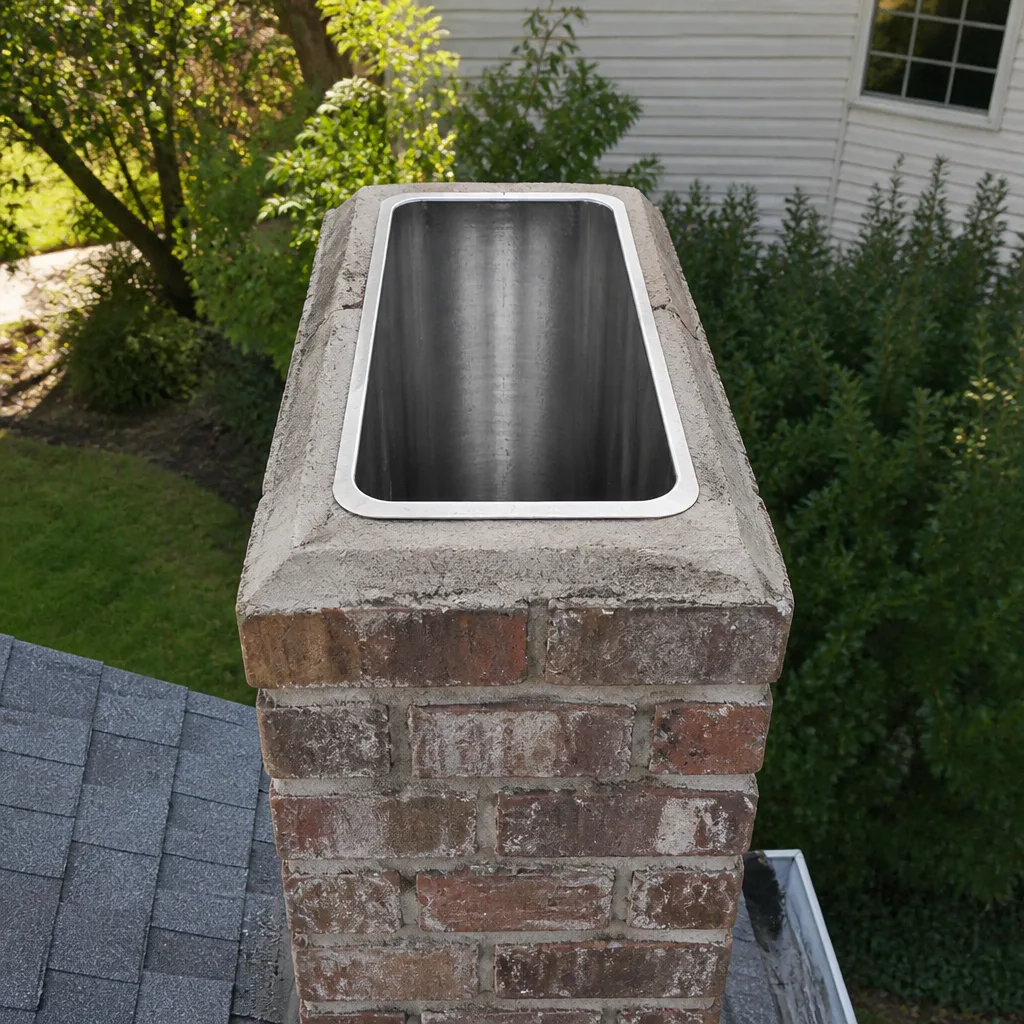
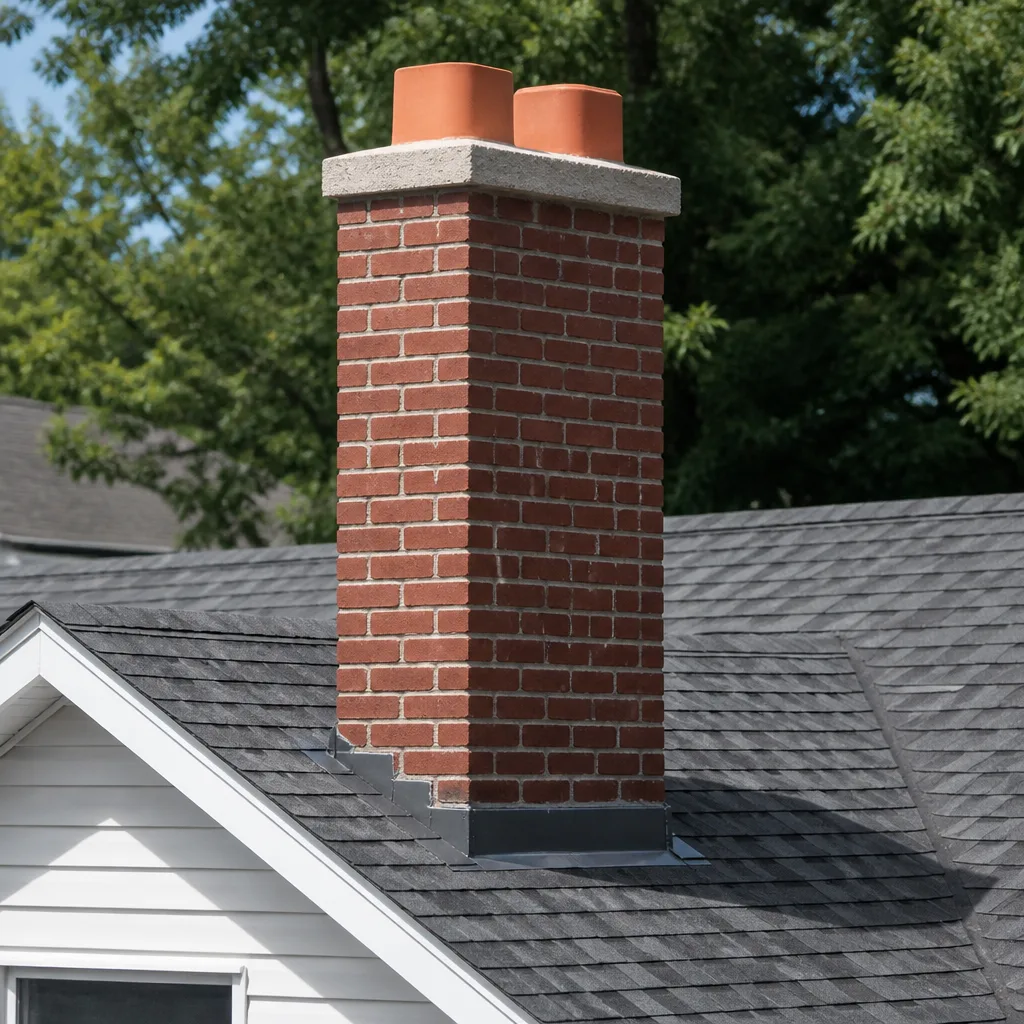
- The crown. The crown is the sloped cap of concrete or masonry at the very top of the chimney. It should shed water away from the flue. Fine hairline cracks are common. Cracks wide enough to catch a fingernail, or any place where the crown has separated from the chimney body, let water in.
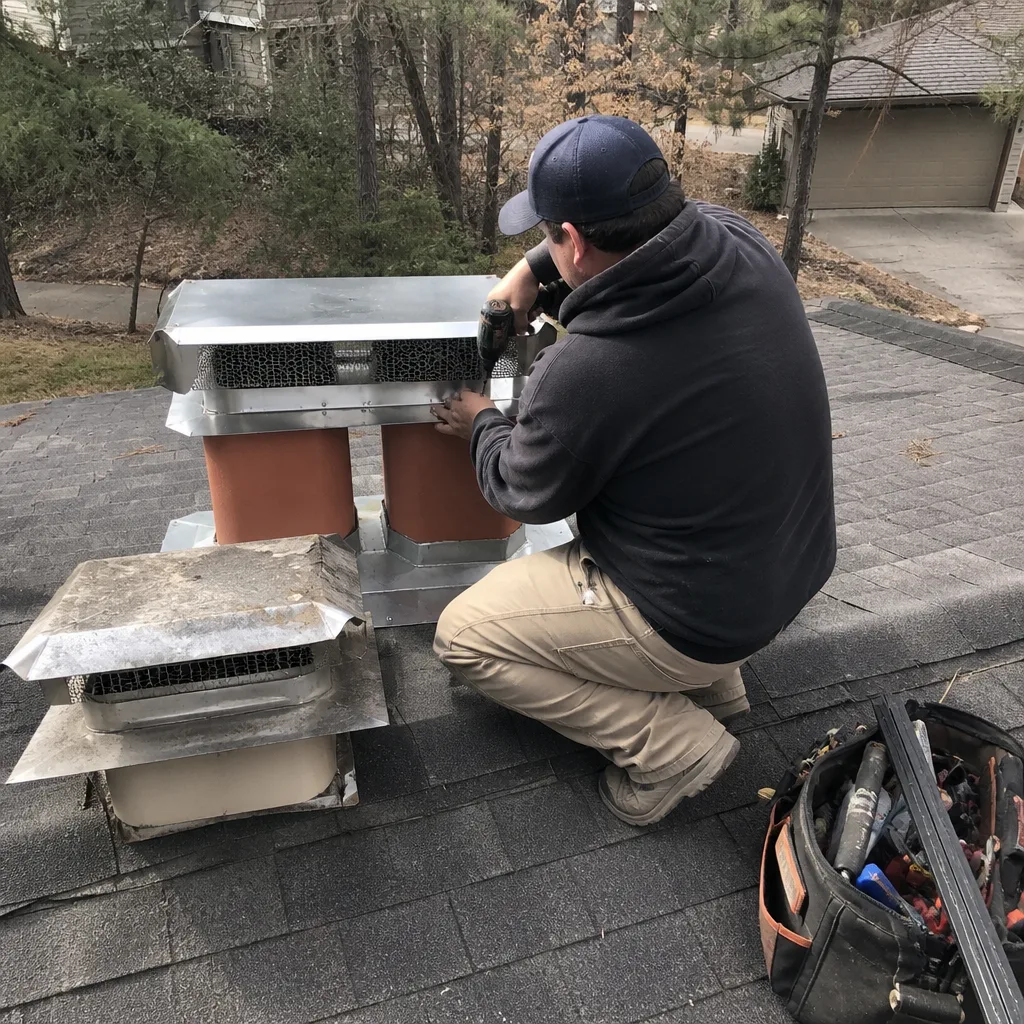
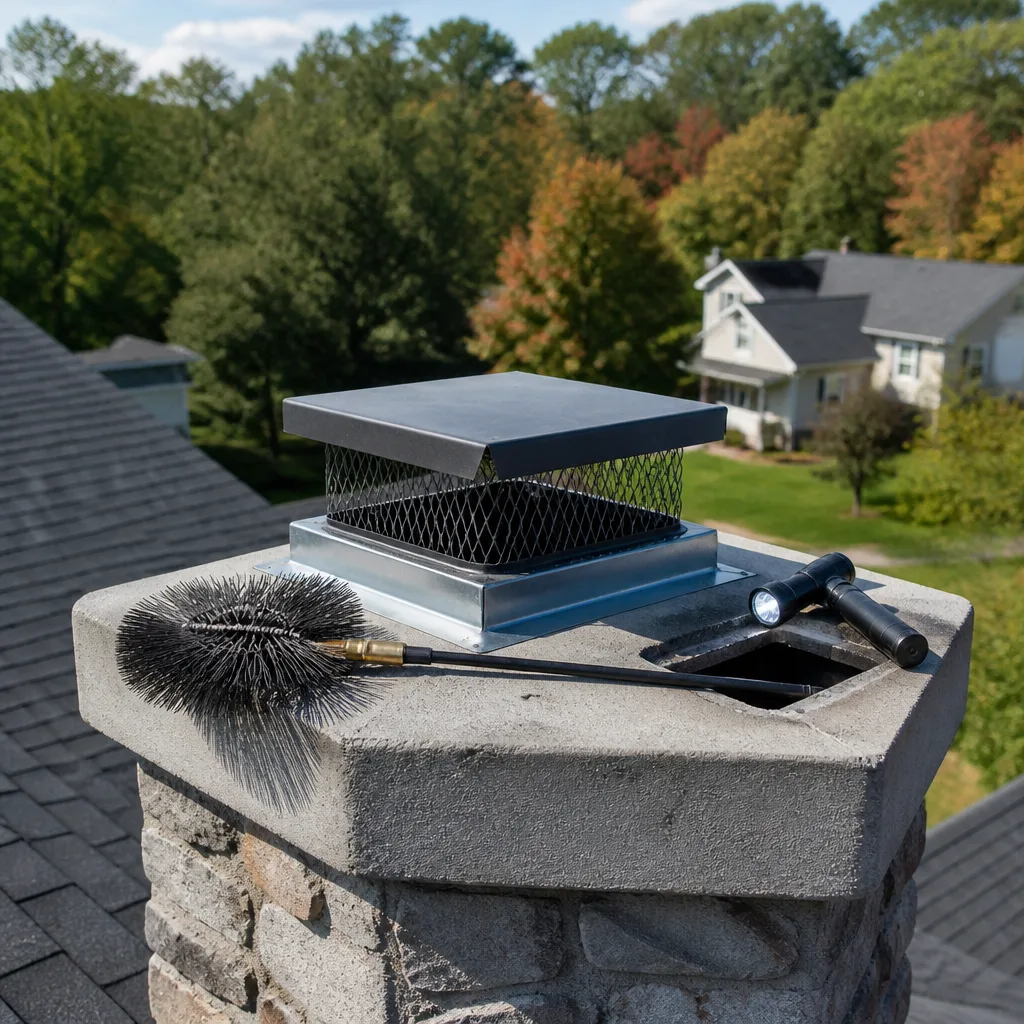
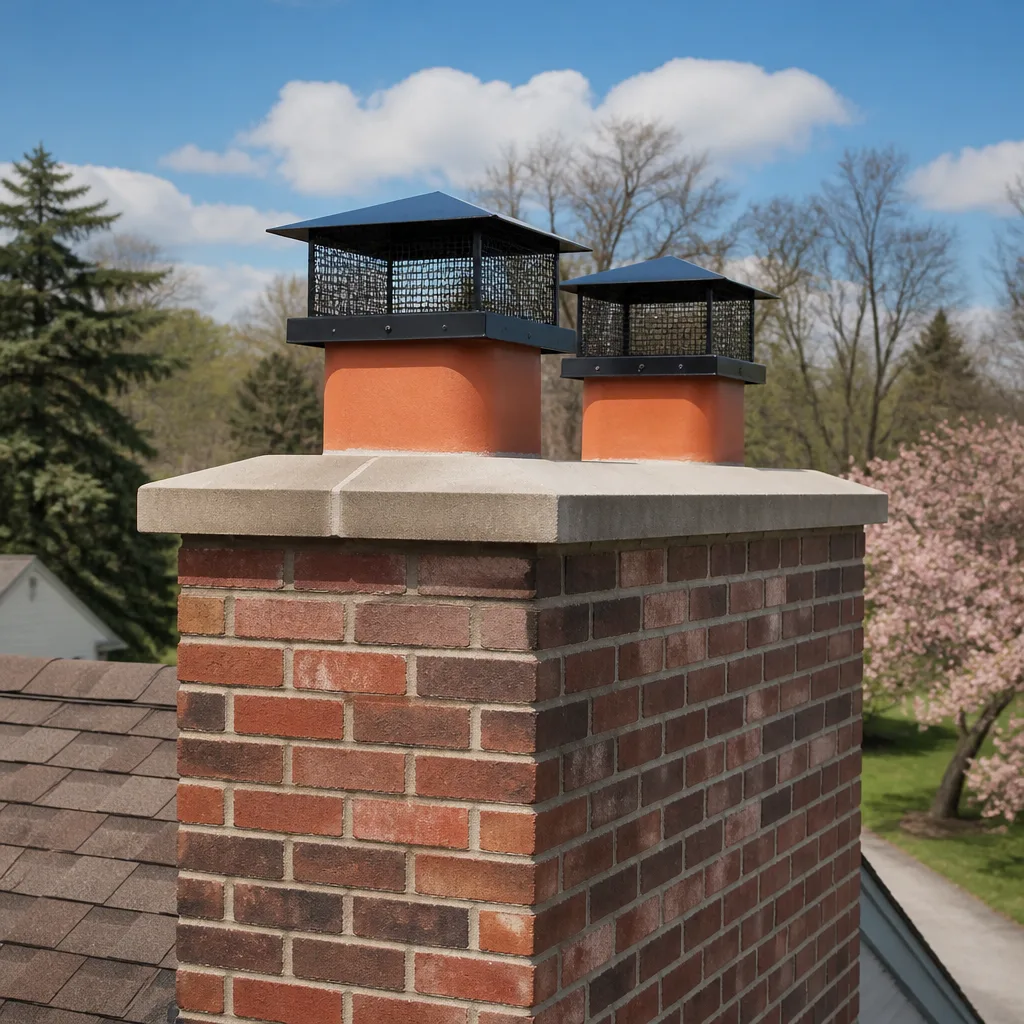
- The cap. A chimney cap is the metal hood over the flue. Check that it’s still firmly seated, that the screen or mesh is intact, and that birds or debris haven’t blocked it. A damaged or missing cap is the single most common entry point for water and animals.
- Efflorescence. That white, chalky staining on brick or mortar is a sign of moisture moving through the masonry and leaving mineral salts behind. Efflorescence doesn’t always mean a serious problem, but it’s a reliable early indicator that water is getting in somewhere.
- Mortar and brick. Look for crumbling mortar joints, spalling brick faces (where the brick surface is flaking off), or any visible gaps. Masonry deteriorates from the freeze-thaw cycle, and small mortar losses get worse every winter.
- Flashing and roof contact. The metal flashing where the chimney meets the roof is a frequent leak point. Check for lifted, rusted, or separated flashing edges.
- Staining below the roofline. Vertical streaks or rust-colored stains running down the chimney exterior suggest water is tracking through the masonry.
If any of these checks turns up something that wasn’t there last time, that’s your trigger for an unscheduled professional inspection. When we schedule a chimney sweep for a Saddle Rock home, we look at the same list but from a ladder and from the roof, which is often where the detail matters.
The Interior Checklist: Reading Your Firebox
The inside of your firebox tells you things the exterior can’t. Where the exterior shows how the chimney is holding up against weather, the firebox and the firebox walls show how the chimney is holding up against fire, heat, and smoke. Several interior conditions are early warnings that something is developing in the flue above, where you can’t see without a camera.
Take ten minutes before you light a fire for the first time this season, and a few minutes after each fire, to check these:
- Spalling firebrick. The firebrick lining the firebox should be sound, with tight joints. If brick faces are flaking, crumbling, or breaking away, that’s spalling. It may mean the firebox has taken too much heat, or that moisture has gotten into the masonry and is forcing it apart.
- Cracked firebox joints. Cracks in the mortar between firebrick can let heat and gases reach the masonry behind the firebox. Some hairline cracking is normal; widening cracks or joints where material is missing are not.
- Smoke staining patterns. Look at the face of the fireplace and the wall above the opening. Fresh, heavy, or asymmetric smoke stains can mean the draw isn’t working as it should, or that smoke is back-drafting into the room under some conditions. Staining that starts high and streaks upward is worth a call.
- Odor timing. A faint smoky smell when the fireplace is cold is common. A strong creosote smell that appears when it rains, when the flue is cold, or in warmer weather is not. That pattern usually points to creosote buildup, a moisture issue, or a drafting problem in the flue.
- Damper operation. The damper should move smoothly and seal reasonably. A damper that jams, sticks open, or doesn’t close all the way wastes heat and can let flue gases into the room when the fireplace is not in use.
- Debris and animal activity. Check the firebox for leaves, nesting material, or other signs before you ever light a fire.
None of these interior conditions requires you to take apart anything or reach up inside the chimney. They’re all observations you can make standing in the room, and any of them is reason enough to have a specialist take a real look.
Saddle Rock Seasonal Triggers: Freeze-Thaw and Monsoon
Saddle Rock’s climate creates two specific seasons when a check is worth doing even if your “annual” inspection isn’t due yet. The first is late winter and early spring, after the ground has frozen and thawed repeatedly. The second is late summer, after monsoon moisture has worked its way into the masonry.
The reason is that masonry expands and contracts with the freeze-thaw cycle. Water gets into small mortar joints and hairline cracks, freezes, expands, and pushes the material apart a little more each time. A single winter won’t ruin a sound chimney, but it will widen existing problems, and a chimney that showed minor mortar loss in the fall may show real gaps by spring. Late-winter checks are where homeowners first notice crown cracks that weren’t there before.
Monsoon season works the other way. Heavy rain driven by wind finds its way in through a damaged cap, compromised flashing, or a cracked crown. That moisture sits in the masonry or the firebox and doesn’t always dry quickly. The visible signs may show up weeks later as efflorescence, a damp smell, or rust streaks. A late-summer check, especially after a heavy storm, catches water intrusion before it does structural damage over the following winter.
We see both patterns regularly in Saddle Rock, and they’re the two honest reasons a homeowner’s inspection schedule might drift from a simple once-a-year rhythm. If either trigger applies to your house, it’s worth a professional look even if your calendar says you’re fine.
Other Triggers That Justify an Unscheduled Check
- You see or smell smoke backing into the room when a fire is burning.
- The fireplace hasn’t been used in more than a year and is about to be lit again.
- You’ve had a chimney fire, even a small one you think you managed yourself.
- You’re buying or selling a home in Saddle Rock and the inspection report flags anything about the chimney.
- You’ve changed the fuel type or installed a new appliance connected to the flue.
- Your carbon monoxide detector has ever gone off, or you’ve noticed headaches, nausea, or unusual drowsiness when the fireplace is running.
That last item is not a maintenance trigger; it’s an emergency. If your carbon monoxide detector sounds, get everyone outside and call 911 before doing anything else.
How to Document Conditions With Photos
One of the practical things a maintenance checklist can do is help you and your specialist communicate before anyone drives out. Photos taken from the ground and from inside the room let us triage what’s urgent, what’s routine, and what can safely wait until the next scheduled visit.
Here’s how to take useful photos:
- Shoot from the same spot each time. Pick a corner of the yard and take the same exterior shot every season. Comparing the new photo to the last one shows change far better than a single image ever can.
- Use your phone’s zoom, not a ladder. A telephoto lens gets you a detailed view of the crown and cap from ground level. Do not climb on the roof to get a closer look.
- Take one wide shot and one tight shot of anything concerning. The wide shot shows where on the chimney the problem is; the tight shot shows the detail.
- Photograph the interior with good light. Use a flashlight held to the side of the firebox so shadows bring out cracks and staining. Take a shot of the firebox opening and one looking up at the damper and flue opening (with the damper fully open and no fire burning).
- Note the date and any recent weather. A quick note like “after heavy rain” or “late winter thaw” tells your specialist what to look for.
- Send them ahead. A few days before your appointment, text or email the photos with a short description of what you’re seeing.
Good photos help us decide whether a routine sweep is enough or whether you need a full inspection with a camera, and sometimes they save you a second trip. They don’t replace a professional inspection; the inside of the flue isn’t visible from any photo a homeowner can take from the ground or the room.
What You Can Check Yourself and What Requires a Professional
Being honest about where the line is between a homeowner check and a professional job is what makes a maintenance checklist useful instead of stressful. Some items are genuinely yours to handle by looking and listening. Others look simple and aren’t.
Genuine homeowner-observable tasks:
- Ground-level visual inspection of the crown, cap, mortar, flashing, and exterior staining.
- Interior look at the firebox for spalling brick, cracked joints, and smoke staining.
- Operating the damper and noticing whether it moves smoothly.
- Noticing smells, smoke patterns, and whether the fireplace drafts well.
- Photographing conditions and noting timing.
- Confirming your smoke and carbon monoxide detectors are working.
- Scheduling the annual sweep and inspection.
Tasks that require a trained chimney specialist:
- Anything on the roof, including the top of the flue, the crown surface, and the cap from above.
- Climbing into the firebox or reaching up into the flue.
- Camera inspection of the flue liner and the smoke chamber.
- Sweeping the flue and removing creosote buildup.
- Any repair work on the crown, cap, flashing, firebox, or liner.
- Diagnosing a drafting or smoke problem.
- Any gas appliance or gas line work.
Roof work and flue work are the two places where a homeowner injury is genuinely easy to cause. Falling from a roof, breathing concentrated creosote dust, or reaching into a firebox that still has heat in the masonry are all real hazards. A trained professional has the tools, the eye, and the safety setup. That’s not a sales point; it’s the reason the checklist splits where it does.
Creosote, Airflow, and the Sweep Itself
A chimney sweep isn’t just about soot. It’s about three things that work together: creosote removal, airflow, and liner integrity. A clean chimney isn’t just one that looks clean inside; it’s one where combustion gases can move up and out the way they’re supposed to, and where the flue lining is sound enough to contain them along the way.
Creosote is the residue of incomplete combustion. It builds up in layers on the flue walls, and it comes in different forms, from light soot to a glazed, tar-like coating that’s much harder to remove. Creosote is what fuels a chimney fire, and a chimney fire can damage the liner, the masonry, and the surrounding structure. That’s why sweep frequency depends on how much and how hot you burn, not just on a fixed calendar count.
Airflow matters just as much. A blocked or restricted flue, a damaged cap screen, or an oversized or undersized flue can all cause poor draft, which pushes smoke into the room and lets creosote build faster. When we do a sweep, we’re checking all three: how clean the flue is, how well it drafts, and whether the liner is intact.
If the liner is damaged, we have options. The HeatShield liner restoration system is a specialized repair that restores a damaged flue liner without a full tear-out, and it’s a product most basic sweep companies don’t carry. We also use DuraFlex liners where a new liner is the right answer. Parts come from professional supply lines including Olympia Chimney and Famco, rather than from big-box retail, because a chimney cap and the components inside the flue need to fit properly and last.
What a Professional Annual Inspection Actually Covers
If your checklist tells you an annual inspection is due, here’s what that inspection involves. Knowing the scope is the best way to judge whether you got a real one.
- Exterior review. The crown, cap, flashing, masonry, and roofline, checked from a ladder and from the roof.
- Firebox review. The firebox lining, damper, and smoke shelf, checked for cracking, spalling, and heat damage.
- Flue inspection. A look down the flue, often with a camera, to check for creosote buildup, obstructions, and the condition of the liner.
- Draft check. Confirming that the chimney pulls air up and out as it should, and noting anything that suggests back-drafting.
- Appliance connection check. For wood stoves, inserts, or gas appliances, confirming the connection to the flue is sound.
- Written findings and photos. A clear summary of what’s fine, what needs attention now, and what can safely wait. If anything in the report calls for repair, you should have photo evidence you can see yourself.
If the inspection turns up a repair, we’re set up to handle it in the same visit when the parts and weather allow: chimney cap & crown work, fireplace repair, liner work, and full chimney repair. If something can safely wait until next season, we’ll say so. Our technicians have up to 15 years of experience and work only on chimneys, which is why the findings are usually clear and specific rather than vague. For a broader picture of how we approach a visit, start here: Chimney Sweep Saddle Rock.
Common Mistakes to Avoid
- Treating the annual reminder as the only trigger. A lot happens between yearly visits, and a hard winter or a stormy monsoon summer is exactly when an off-cycle check is worth doing. In Saddle Rock, the seasonal swings are the reason to look more often than a calendar suggests.
- Climbing onto the roof for a closer look. The ground-level view catches most visible problems, and roof work is the single biggest homeowner injury risk in chimney maintenance. Binoculars are safer than ladders every time.
- Ignoring efflorescence because the chimney “looks fine.” White staining on the masonry is not cosmetic. It’s evidence that water is moving through the chimney, and it rarely gets better on its own.
- Reaching up the flue to feel for creosote. Creosote dust and residue aren’t something to handle. Reaching up the flue also tends to break the seal of the flue lining it’s there to protect.
- Burning unseasoned wood or scraps to “keep the flue warm.” Damp wood and household waste produce more creosote than seasoned firewood. The result is faster buildup, not a cleaner flue.
- Lighting the first fire of the season without checking anything. Nesting debris, animal activity, and damaged components can all be there before the first fire. A ten-minute pre-season check catches most of them.
- Trusting a report you can’t see the evidence for. If a specialist tells you the liner is failing, ask to see the camera footage or the photos. A real inspection produces evidence you can look at yourself.
When to Call a Professional
Call a professional when any ground-level or firebox check turns up a change you can’t explain, when you smell strong creosote or smoke indoors, when the fireplace drafts poorly or sends smoke into the room, after a chimney fire, or when you’re buying or selling a Saddle Rock home and want a clean, documented inspection. Call before lighting the first fire after a long idle period. And call right away if your carbon monoxide detector has ever sounded. Chimney Sweep Saddle Rock offers free estimates in Saddle Rock. Call (833) 513-8273. We answer 24/7. Fast dispatch from 7am to 7pm, Sunday through Friday.
See the difference
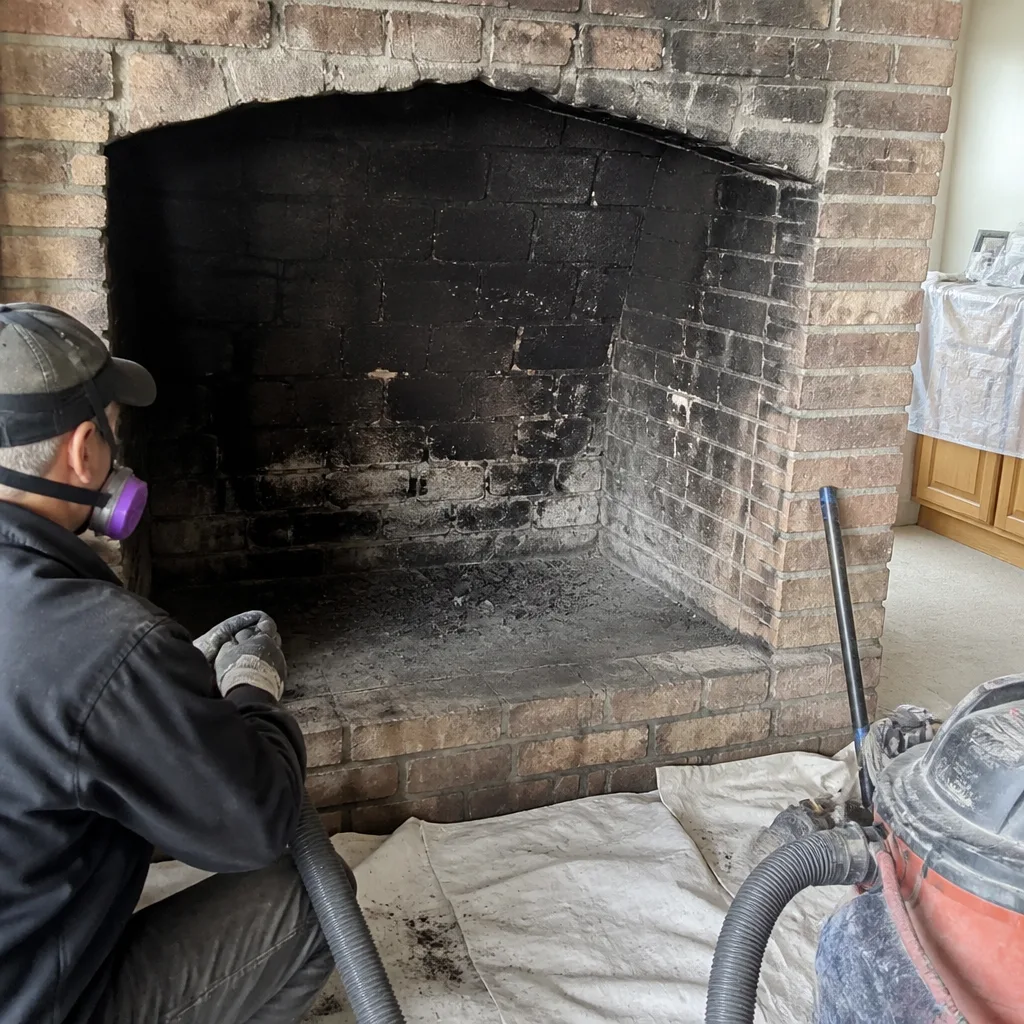 Before
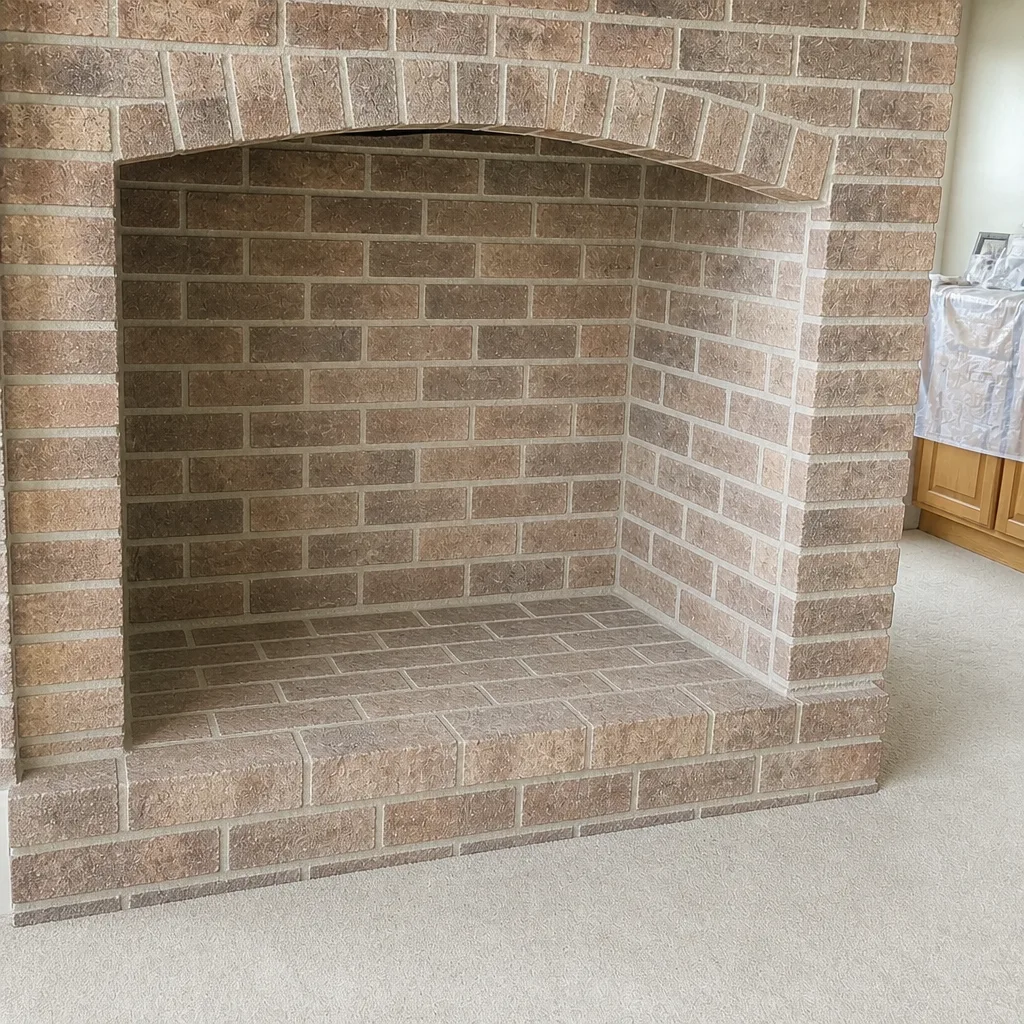 After
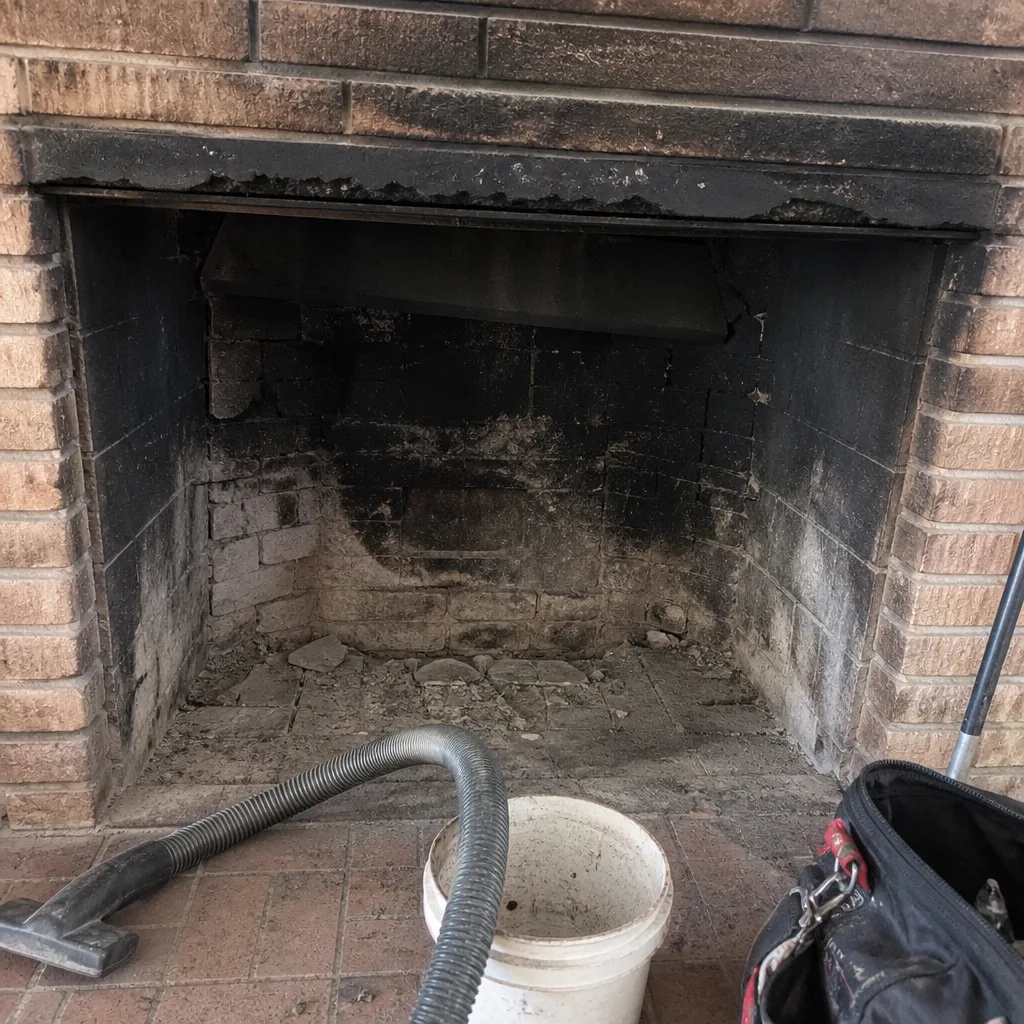 Before
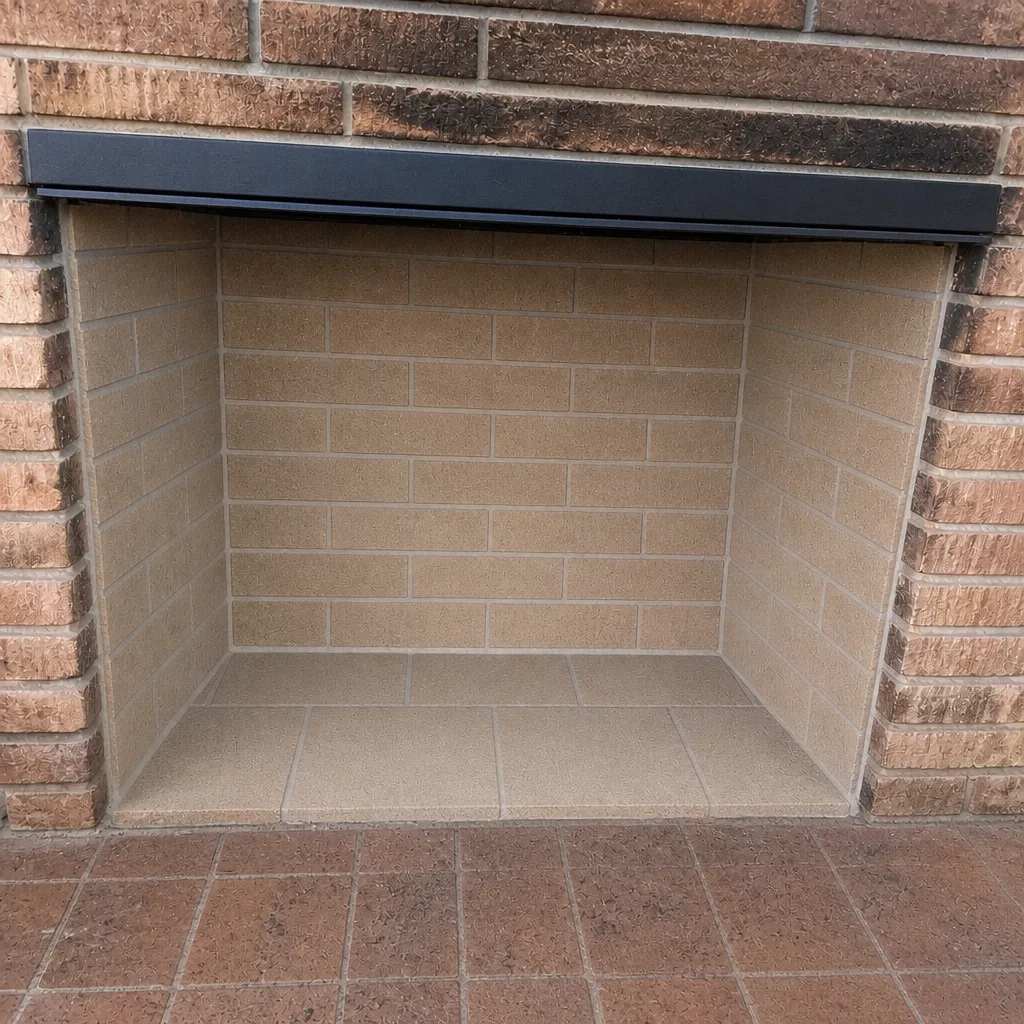 After
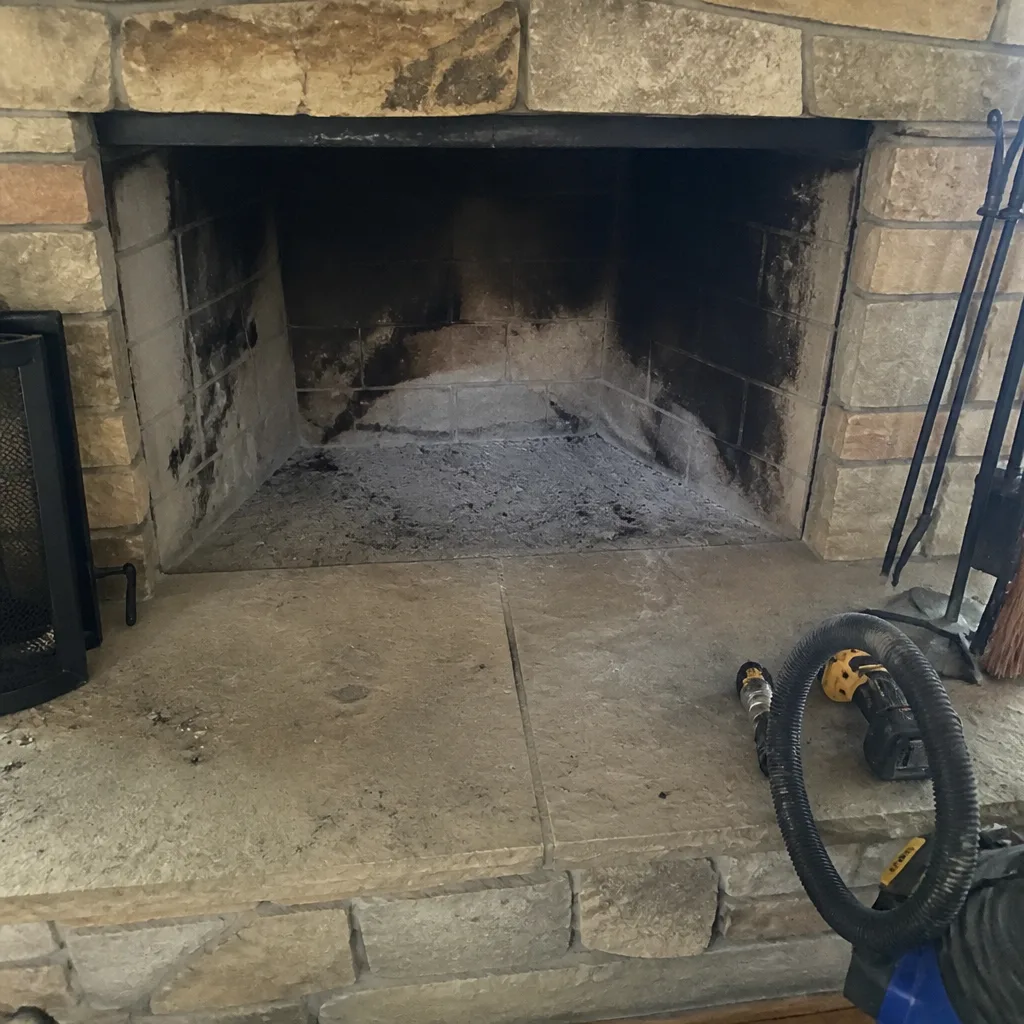 Before
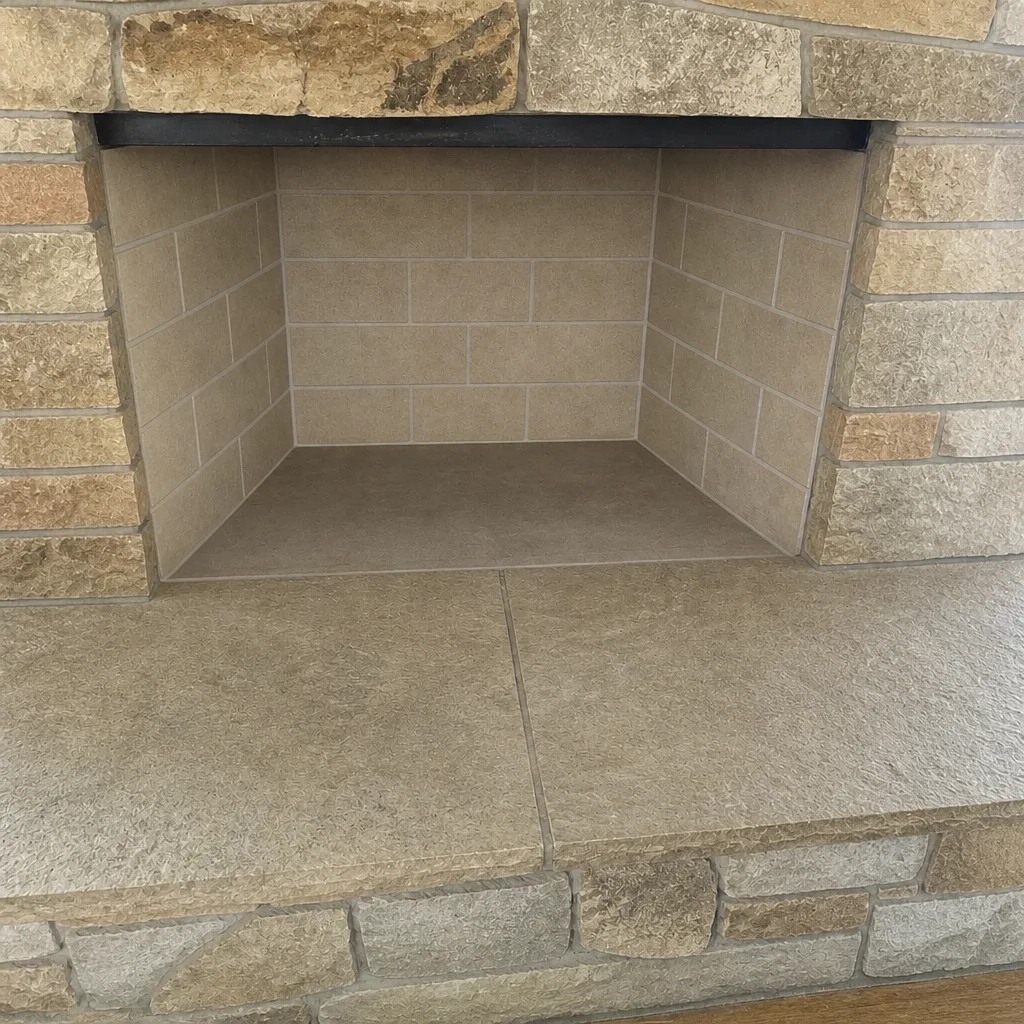 After
Frequently Asked Questions
Most wood-burning chimneys in Saddle Rock should be swept about once a year, but the honest answer is that it depends on how much and how hot you burn. A fireplace used heavily through the winter will build creosote faster than one used occasionally. An annual inspection confirms whether the buildup is at a level that needs a sweep.
Efflorescence means water is moving through your chimney’s masonry and leaving mineral salts behind as it dries. It’s not damage itself, but it’s a reliable sign that water is getting in somewhere, often through the cap, the crown, or a mortar joint. Call (833) 513-8273 to have a professional look.
Yes, and it’s the most useful thing you can do between professional visits. Ground-level checks of the crown, cap, flashing, and exterior staining, plus a look at the firebox, catch most visible early-warning signs. Anything needing a ladder, a roof, or access into the flue belongs to a trained specialist.
The clearest warning signs are visible damage to the firebox (spalling brick, widening joints), smoke backing into the room, a floating or unusually strong creosote smell, and any evidence from a camera inspection of gaps, cracking, or missing liner material. If the liner is damaged, it should not be used until it’s repaired or restored.
Yes, in two specific ways. The freeze-thaw cycle widens small cracks and mortar joints through the winter, and monsoon moisture finds its way into the masonry in late summer. Both are worth an off-cycle check, and both are among the reasons Saddle Rock homeowners sometimes need an inspection before their annual one is due.
Creosote keeps building, small mortar and crown problems get worse with every freeze-thaw, and moisture damage spreads quietly. None of that is a reason to panic, but it is a reason to have the chimney assessed before lighting a fire again. A camera inspection will show how much can safely wait and what should be addressed now.
The Bottom Line
A chimney maintenance checklist is only as useful as it is specific. For Saddle Rock homeowners, that means three things. First, ground-level and firebox checks done regularly catch most visible early signs, from crown cracking and cap damage to efflorescence and spalling firebrick. Second, freeze-thaw and monsoon moisture are the two seasonal triggers worth an off-cycle professional look. Third, the line between homeowner-observable tasks and professional work is real, and roof or flue climbing is never a homeowner job. Do the checks you can, document what you see, and call a specialist before the next fire.
Contact Chimney Sweep Saddle Rock
Chimney work is all we do. If your checklist turns up anything worth a closer look, or if you simply want a full inspection before the season starts, give us a call. We answer 24/7 and offer free estimates. Call (833) 513-8273. Fast dispatch from 7am to 7pm, Sunday through Friday.
Written by the team at Chimney Sweep Saddle Rock.