
Last updated November 23, 2026
 Sweep & inspection
 Caps & crowns
 Flue relining
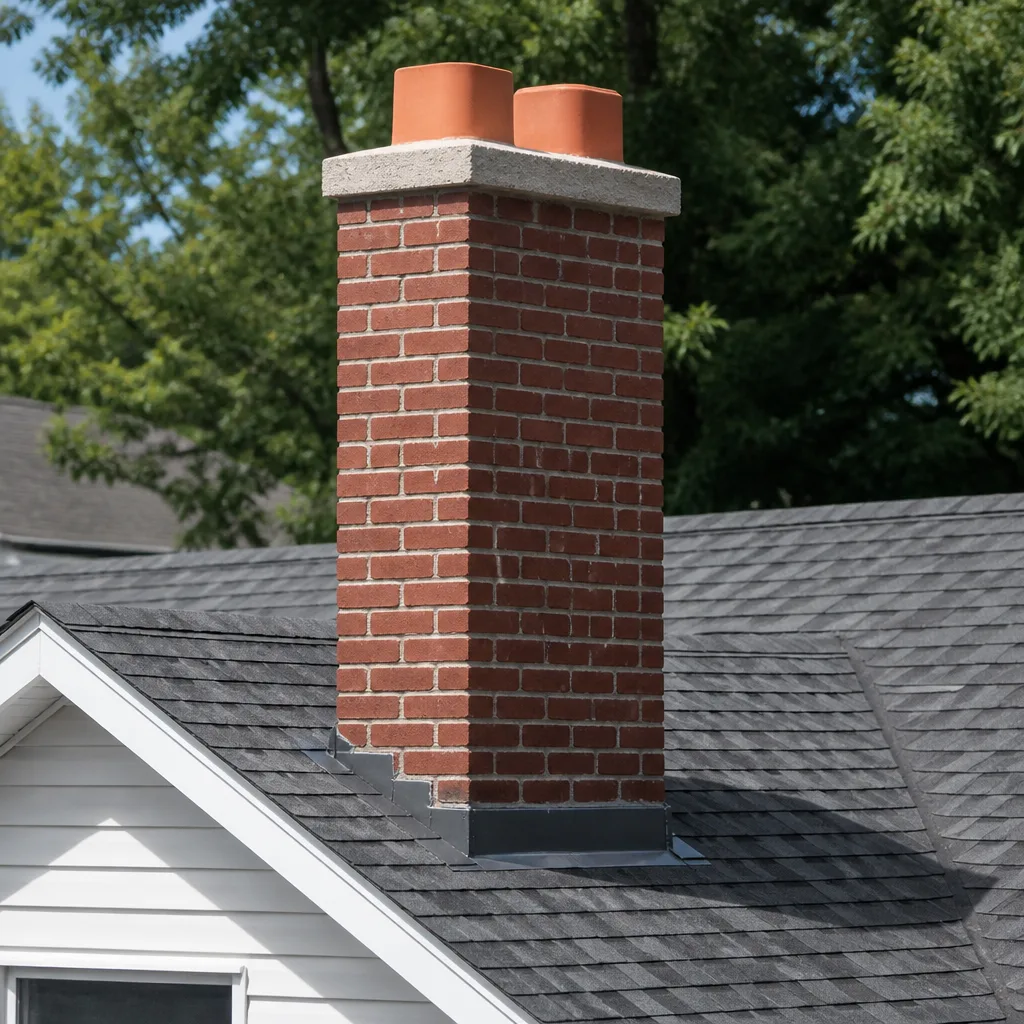 Masonry repair
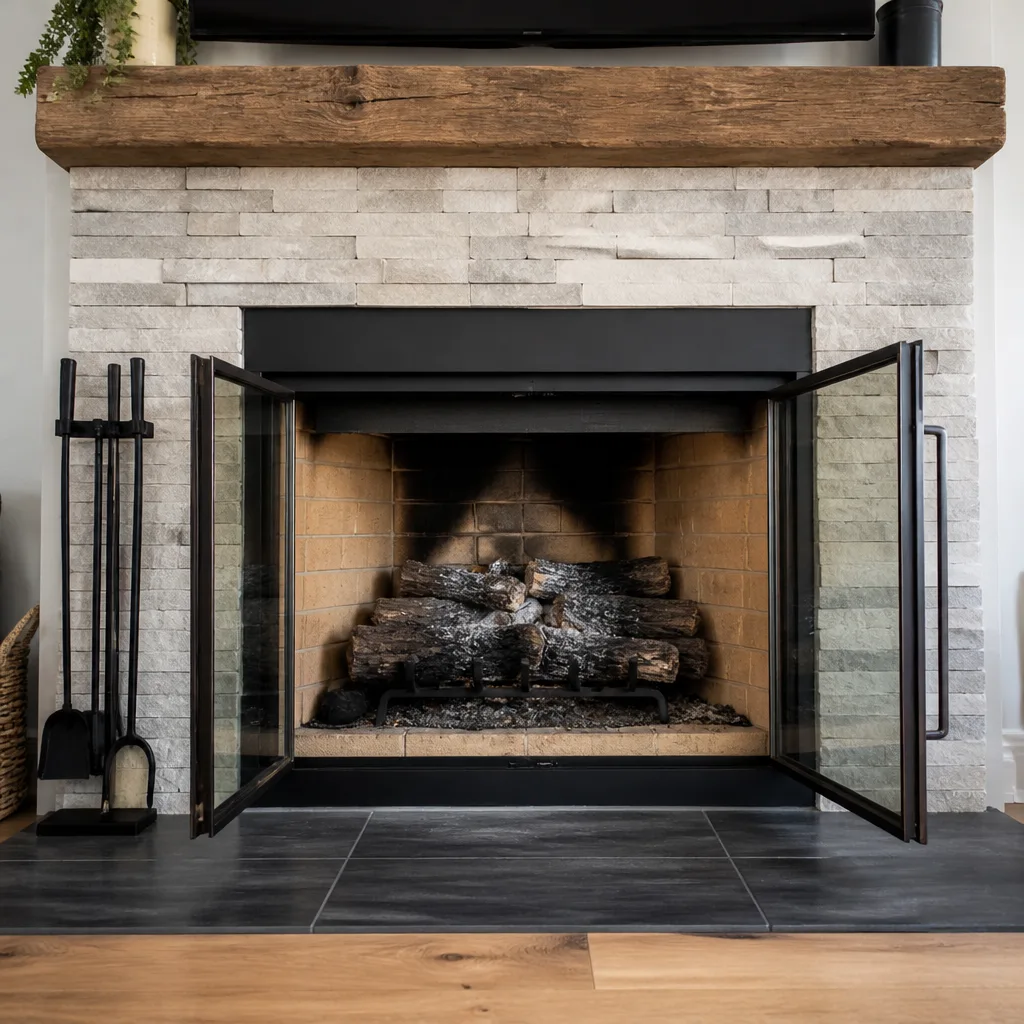 Gas fireplace service
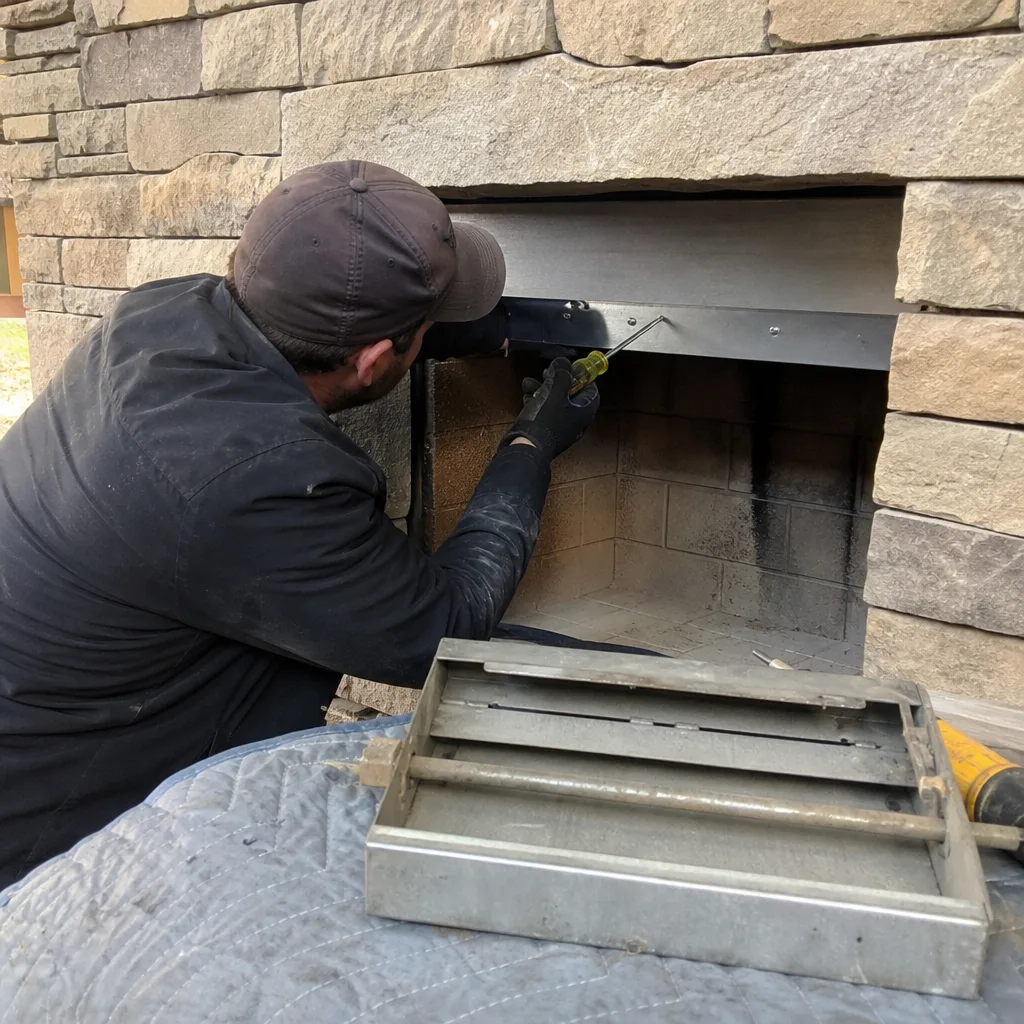
Level 1 sweep and inspection to the NFPA 211 annual standard - flue, crown, cap, and flashing checked and photographed
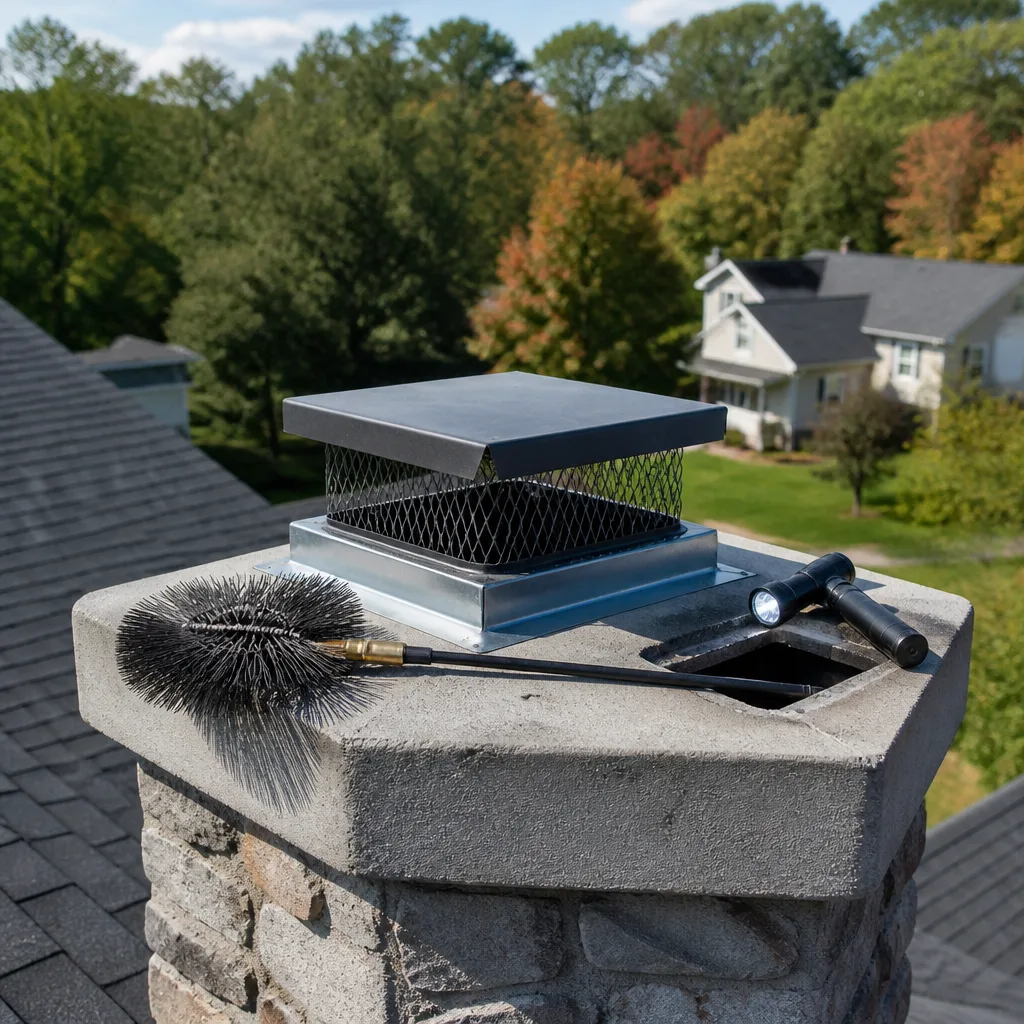
Chimney sweep logs do not sweep chimneys. They loosen some creosote - which then falls where a brush and vacuum still have to collect it.
Chimney Cleaning Emergency Preparedness Guide for Saddle Rock Homes
A chimney fire sounds like a freight train running through your roof. Most homeowners who’ve lived through one say they had no idea what it was for the first thirty seconds, and those thirty seconds are exactly the ones that matter. The same is true of carbon monoxide backing down a flue and of a crown that’s quietly separating from the stack. None of these announce themselves politely. What separates a scary evening from a real loss is whether you already know what you’re hearing, what to shut off, and who to call. This guide walks through all three emergency categories for Saddle Rock homes, with the prevention window and response steps for each.
Quick Answer
Chimney emergencies fall into three groups: chimney fire, carbon monoxide intrusion from backdraft, and structural failure of the cap, crown, or flue liner. Each has a different warning sign, a different immediate response, and a different inspection that has to follow it. Preparing before an emergency means knowing the three sounds and smells of an active chimney fire, placing at least one CO detector where flue gas actually accumulates, and keeping a current inspection record on file so your insurer and fire marshal have documentation if something happens.
Styles & brands we work with
- Sweep & inspection
- Caps & crowns
- Flue relining
- Masonry repair
- Gas fireplace service
Table of Contents
- The Three Chimney Emergencies Saddle Rock Homes Actually Face
- How to Identify an Active Chimney Fire in the First Thirty Seconds
- Why Carbon Monoxide From a Chimney Is a Different Risk
- What to Do After a Chimney Fire Before Lighting Another One
- Preparing Your Fire Suppression Access Points
- Why Your Inspection Record Matters After an Incident
- Prevention Windows for Each Emergency Type
- Common Mistakes to Avoid
The Three Chimney Emergencies Saddle Rock Homes Actually Face
Most homeowners think of a chimney emergency as one thing: the chimney catches fire. In practice, Saddle Rock chimney problems divide into three distinct categories, and each one behaves differently enough that the same preparation doesn’t cover all of them. Understanding the split changes how you maintain your system and how you respond when something goes wrong.
The three categories:
- Chimney fire – Combustion inside the flue itself, usually fueled by creosote buildup. Loud, fast, and often over before the fire department arrives, but the damage it leaves behind is what causes the real trouble.
- Carbon monoxide intrusion – Combustion gases that should be leaving through the flue find their way back into the living space instead. Silent, slow, and easy to mistake for a furnace problem or just a headache.
- Structural failure – A cap or crown that’s cracked, a flue liner that’s spalled or separated, or masonry that has moved. Sometimes sudden, sometimes a slow failure over several heating seasons, and the one most likely to go unnoticed until it’s expensive.
Each category has a different prevention window and a different response protocol. A chimney fire is a matter of minutes. CO intrusion can build over hours. Structural problems unfold over years, which is why the annual inspection record matters so much in Saddle Rock – it catches the slow failure before it becomes a chimney fire or a CO event.
In our experience, the homeowners who handle a chimney problem well are almost always the ones who already knew which of the three they were dealing with when it started. The unfamiliarity is what costs time.
How to Identify an Active Chimney Fire in the First Thirty Seconds
A chimney fire is not a fire you see. It’s a fire you hear and smell, and by the time flames are visible at the top of the stack, the flue has usually been burning for a while. Learning the three signals ahead of time is the single most useful piece of emergency preparation a Saddle Rock homeowner can do.
The three sounds and smells to know:
- A low roaring or rumbling – often described as a freight train, a distant jet, or a deep whoosh coming from the chimney chase. This is the sound of ignited creosote pulling air up the flue. It is not the normal sound of a wood fire, which pops and crackles at a higher pitch.
- Ticking, tapping, or crackling from inside the flue – creosote expanding and flaking as it burns. If your fire is out and you still hear ticking from the chimney, take it seriously.
- A hot, acrid, tar-like smell – distinct from the smell of a normal wood fire. It often reads as burning plastic or hot roofing tar, and it can appear in a room with no fireplace at all if the flue is venting into the attic or a neighboring space.
Other visible cues include dense smoke or a haze of sparks at the top of the stack, a pinging sound from the stovepipe or firebox metal expanding, and a damper or stove that suddenly won’t draw the way it usually does.
Correct immediate response sequence:
- Get everyone out of the house and call 911 from outside. Do not stop to gather belongings.
- If the fireplace has a glass door, close it. If it has a screen, leave it in place.
- If you can safely reach the damper, close it to reduce the air feeding the fire. If you can’t reach it safely, don’t try.
- Do not put water on a chimney fire. The thermal shock can crack masonry and send steam and debris back into the room.
- Wait for the fire department. Do not re-enter the home until they clear it.
If you don’t yet know where your damper handle is or whether it opens smoothly, find out before the next burning season. That is the kind of preparation that matters in Saddle Rock when the weather turns cold and the fireplace becomes part of daily life. A chimney sweep visit is also the moment to confirm the damper moves freely and to clear the creosote that makes a fire possible in the first place.
Why Carbon Monoxide From a Chimney Is a Different Risk
Carbon monoxide from a chimney backdraft behaves differently than furnace CO, and the difference has real consequences for how you set up your detectors. The standard advice – mount a CO alarm near the bedrooms and in the hallway – is designed around furnace and appliance leaks, where the gas usually originates in a utility space and drifts through the home. Chimney backdraft is a different animal.
When a chimney backdrafts, combustion gases reverse flow and enter the room where the fireplace sits, or they vent into an attic or chase and accumulate from the top down. Because carbon monoxide is nearly the same weight as air, it doesn’t reliably rise to a high hallway detector, and it doesn’t necessarily stay in the room with the fireplace. It mixes.
What this means for detector placement in Saddle Rock homes:
- Put at least one CO detector in the room with the fireplace, not just the hallway. This is the room where backdraft enters first.
- Add a detector in any room that shares a wall or floor with the chimney chase. Backdraft can leak through gaps around the flue.
- If your home has an attic access or a mechanical space near the chimney, that’s a third placement worth considering, especially in older Saddle Rock houses where chimney chases weren’t always sealed tightly.
- Test every CO detector at the start of each burning season and replace the battery at the same time you would change a smoke alarm battery.
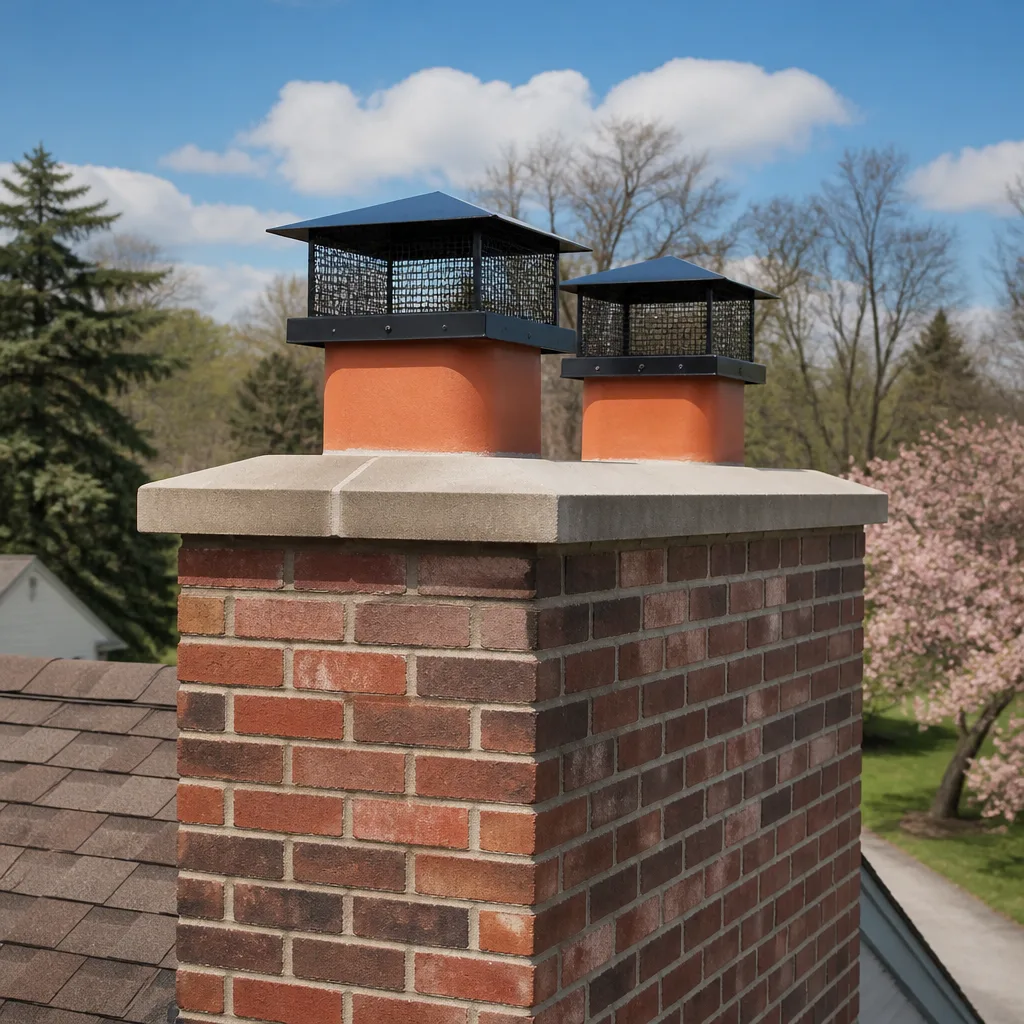
Backdraft is also more likely in certain conditions – a cold flue that hasn’t warmed up, a house that’s too tight, a bath fan or dryer running while a fire is lit, or a chimney with a partially blocked flue. Most of those are preventable with a properly fitted cap and a clean flue, which is one reason we install caps from brands like Gelco and Famco that hold a tight fit rather than a loose one.
If your CO detector ever alarms while a fire is burning, treat it as a chimney problem until you’ve proven otherwise. Put the fire out if you safely can, open windows, leave the house, and call from outside. Do not assume it’s a furnace issue.
What to Do After a Chimney Fire Before Lighting Another One
After a chimney fire, the fire itself is the easy part. What follows is where homeowners get into trouble, because creosote fires often leave a flue that looks fine from the firebox but is not structurally sound. Lighting another fire in a chimney that has been through a creosote fire without a proper inspection is how a small event becomes a large one.
The specific inspection that has to happen:
- A full Level 2 inspection – the level that covers the flue interior, the chimney exterior, the firebox, the damper, the cap and crown, and the connection to the appliance. This is the level required after a chimney fire or a chimney-related event.
- A video camera scan of the flue from top to bottom. Creosote fires can spall the inner surface of a clay tile liner, open a hairline crack into the surrounding masonry, or delaminate a metal liner. None of that is visible from the firebox.
- An exterior check of the crown, the cap, and the masonry joints. Thermal shock from a chimney fire is a common cause of crown cracks that weren’t there before.
- A written report with photos. This becomes your documentation for insurance and, if the fire department was involved, for their records.
A visual check from the firebox is not sufficient. We say that plainly because we’ve seen the consequence: a homeowner who had a chimney fire, looked up the flue with a flashlight, saw tiles that appeared intact, and lit another fire a week later. The hairline crack ran the length of a tile and opened under heat. A camera scan would have found it in ten minutes.
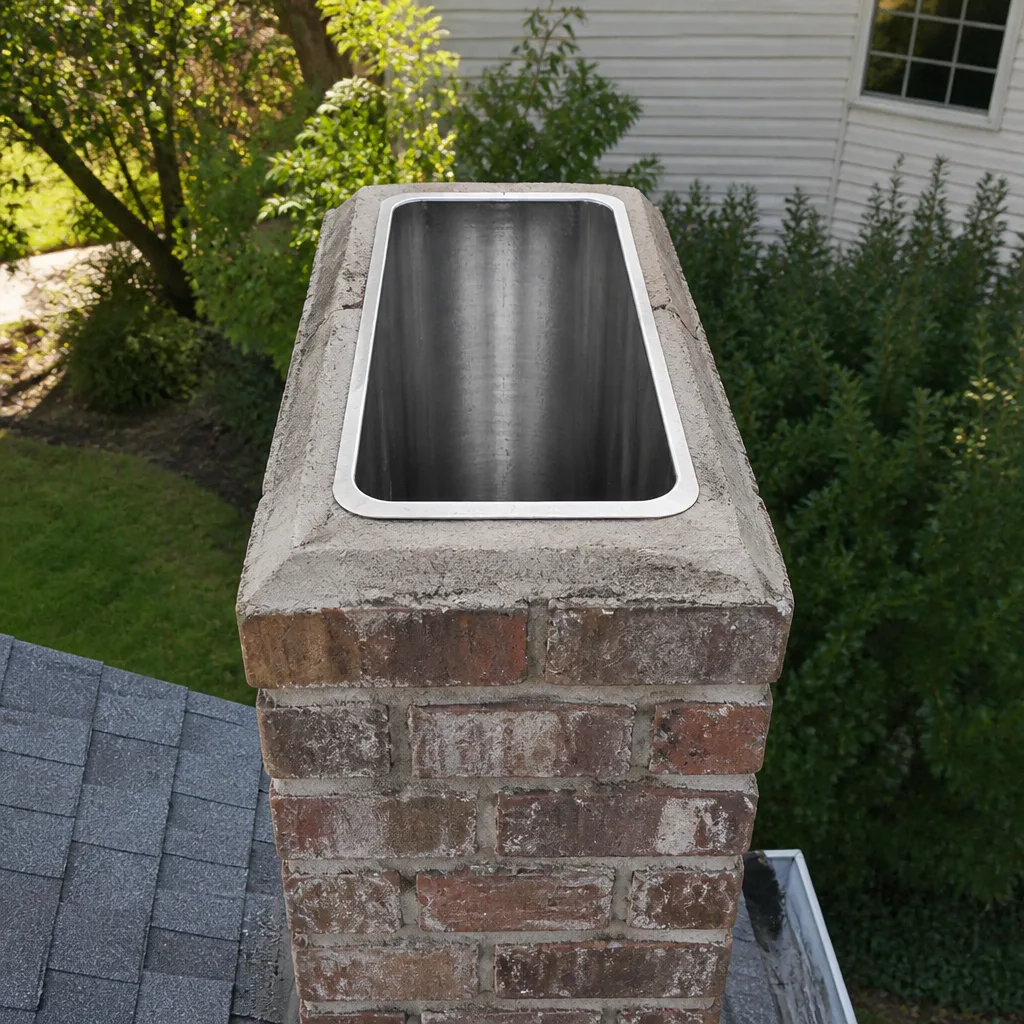
If the inspection finds damage, the repair may be as straightforward as a chimney cap & crown replacement or as involved as a liner restoration. The HeatShield liner restoration system is a good example of why specialist training matters – it’s a proven method for restoring a damaged clay flue from the inside, and most sweep-only companies don’t carry it. We do, and we use it because it’s a name-brand system with a track record, not a generic coating.
Preparing Your Fire Suppression Access Points
In a chimney emergency, you will not have time to figure out where the damper handle is, whether the exterior cleanout door opens, or whether the fire department can reach the roof. Preparing your access points before an emergency is a fifteen-minute job that every Saddle Rock homeowner should do this season.
What to locate and check:
- Damper handle or lever – open and close it once before the burning season starts. If it sticks, that’s a problem to fix before you need it to close under pressure.
- Firebox door or screen – know how it latches and how it seals. A properly closing glass door can slow a chimney fire by cutting its air supply.
- Exterior cleanout door – many chimneys have a metal cleanout at the base on the exterior. Make sure the fire department can find it if they need it, and that it isn’t buried under landscaping or a deck.
- Roof access – clear a path the fire department can use if they need to reach the top of the stack. Don’t leave ladders leaning against the chimney itself.
- Gas shut-off for a gas fireplace – a fireplace log set or gas insert has its own shut-off valve. Know where it is and how to close it. This is different from the damper and is the correct action for a gas-related chimney event.
- Chimney location on your home’s exterior – confirm whether your chimney is on an interior wall or an exterior chase. This affects how thoroughly the fire department will need to inspect wall cavities after a fire.
Write the locations down and keep the list with your other home emergency information. If two people in the household can find each access point independently, you have real coverage. If only one person knows, that’s a gap.
If you’re not sure where any of these are, or you want a second set of eyes checking the damper, do that as part of an annual Chimney Sweep Saddle Rock inspection. It’s a natural moment to walk the system with a technician who knows what a properly operating damper and cleanout feel like.
Why Your Inspection Record Matters After an Incident
The paperwork from your most recent chimney inspection is one of the most useful documents a Saddle Rock homeowner can keep. It’s the record that shows, after a fire or a CO event, what condition the chimney was in before anything happened, and what work was recommended at the time.
Where that record matters:
- Insurance claims – most insurers ask for the last inspection report when a chimney-related claim is filed. A current report with photos and findings gives the adjuster what they need to process the claim without delay.
- Fire marshal documentation – if the fire department responded, they will usually ask what the chimney condition was beforehand. A report from a chimney specialist answers that in writing.
- Home sale transactions – a buyer’s inspector will flag any chimney that lacks a recent inspection. A clean recent report is a selling point and shortens the negotiation.
- Your own baseline – the report establishes the condition of the flue, cap, crown, and firebox at a known point in time. When a problem turns up later, you know whether it’s new damage or something that was already identified.
Keep inspection reports with your home maintenance file and hold on to the last two or three. We use name-brand materials across the full chimney lifecycle – DuraFlex liners, HeatShield restoration, Olympia Chimney and Copperfield components – and part of the reason we’re particular about brand is that the paper trail matters. When your record lists specific materials, the material history is traceable, and that history is what makes an insurance claim or a fire marshal review go smoothly.
Prevention Windows for Each Emergency Type
Every chimney emergency has a prevention window, and knowing which one you’re in tells you what to do next. This is where the three-category split earns its keep – the timing is different for each.
Chimney fire – prevention window is one burning season out. Creosote accumulates during the season, and it accumulates fastest in a chimney that burns cool, damp wood or runs without a proper draft. The prevention is a sweep before the season starts, plus attention to wood quality and fire temperature during. Saddle Rock homes that run their fireplace daily through the winter benefit most from a pre-season sweep rather than waiting until spring.
Carbon monoxide intrusion – prevention window is a single device. The best prevention for CO from a chimney is one properly placed detector plus a cap and a clean flue. If your only CO detector is in a bedroom hallway and your fireplace is in the living room, you have a gap. Add the detector and check the cap.
Structural failure – prevention window is the annual inspection. Crowns crack over freeze-thaw cycles. Caps work loose. Liners spall. The annual inspection catches each of these while repair is still straightforward. Without an annual inspection, a structural problem runs for years in the background and then shows up as part of a much bigger repair.
In our experience, the single highest-value action for a Saddle Rock homeowner is a pre-season inspection with a written report. It hits all three windows at once: it clears the creosote, it verifies the cap and crown, and it establishes the record. Our technicians have up to 15 years of experience doing exactly that work on Saddle Rock chimneys, and the inspection and any repair happen through the same call.
If the inspection turns up a fireplace problem – a damaged firebox, a crumbling damper, a gas log set that needs servicing – we handle the fireplace repair on the same visit. That’s the practical benefit of a chimney-only specialist: the inspection and the fix come from the same place.
Common Mistakes to Avoid
- Assuming a visual check is enough after a chimney fire. Creosote fires cause damage you can’t see from the firebox. The only reliable check is a Level 2 inspection with a camera scan of the flue interior.
- Putting a CO detector only in the hallway. Backdraft enters in the room with the fireplace. That room needs its own detector.
- Closing a damper before the fire is fully out. This traps heat and smoke in the firebox and can crack glass doors or push smoke into the room. Close it only during an active fire to cut air, then open it again once the fire is out and the fire department is on scene.
- Skipping the annual inspection in a year when the fireplace “seemed fine.” Structural problems hide. Saddle Rock’s freeze-thaw cycles open cracks in crowns and masonry joints over the winter, so the spring or fall inspection catches things the fireplace itself never announces.
- Burning unseasoned or green wood to save money. Wet wood runs cool, produces more creosote, and loads the flue with exactly the fuel that a chimney fire needs.
- Not telling the fire department where the cleanout door is. If they need to clear debris from the base of the chimney, the cleanout speeds the whole response. Show them on the way out.
- Tossing the inspection report into a drawer or losing it. The report is documentation for insurance and fire marshal purposes. Keep the last two or three.
See the difference
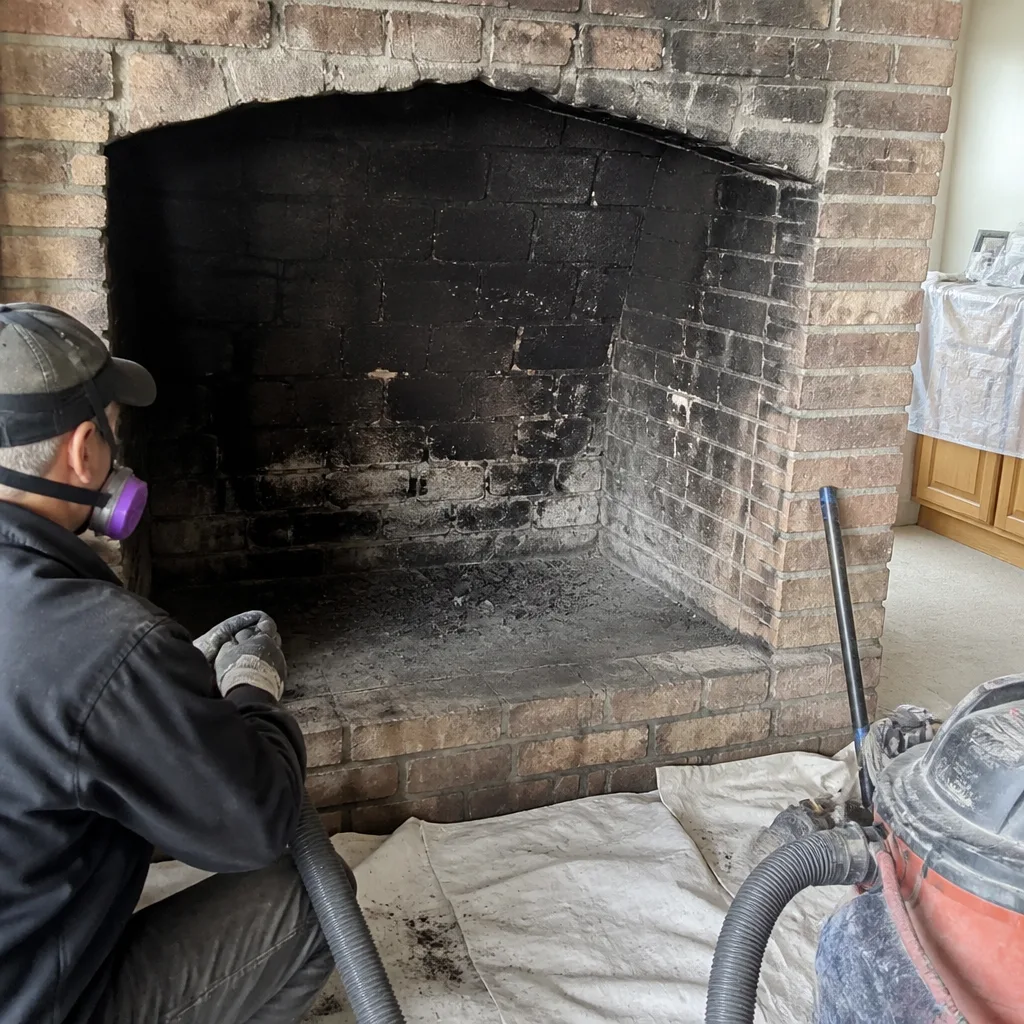 Before
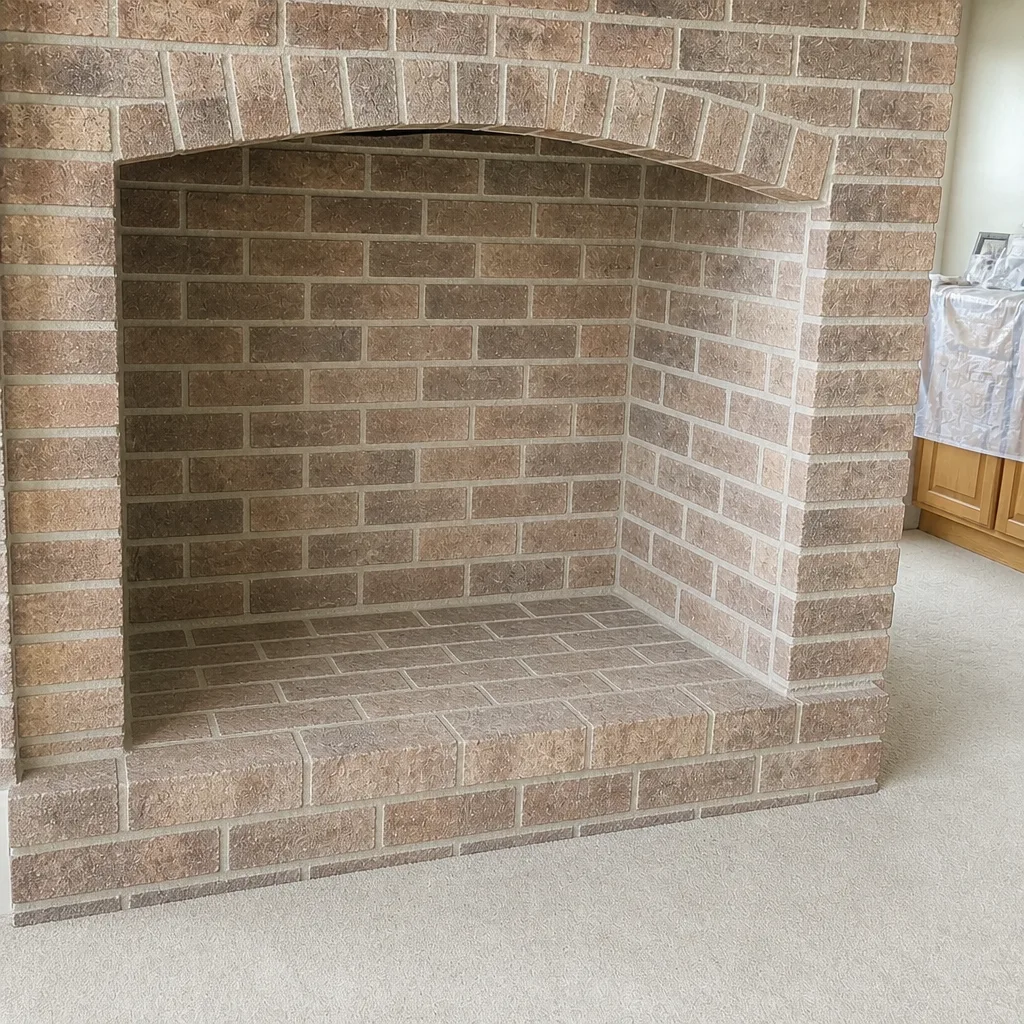 After
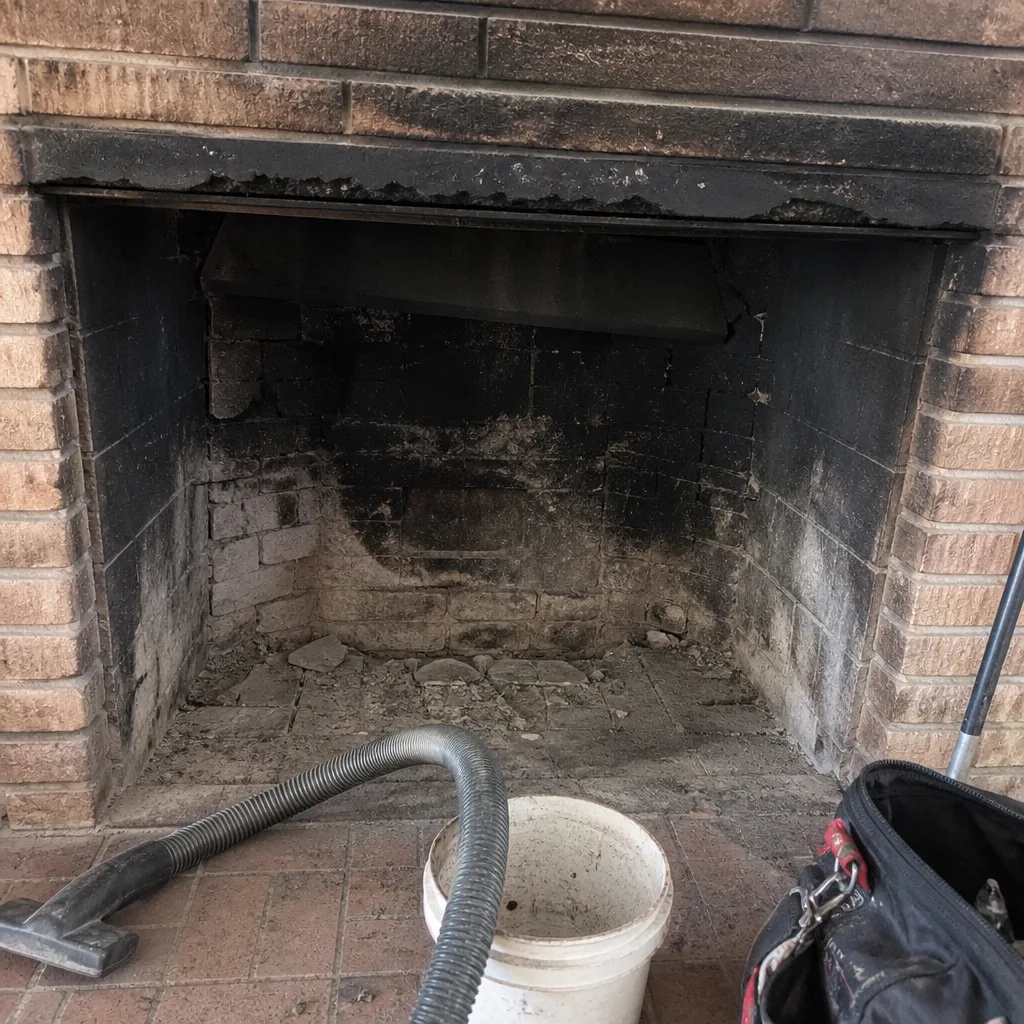 Before
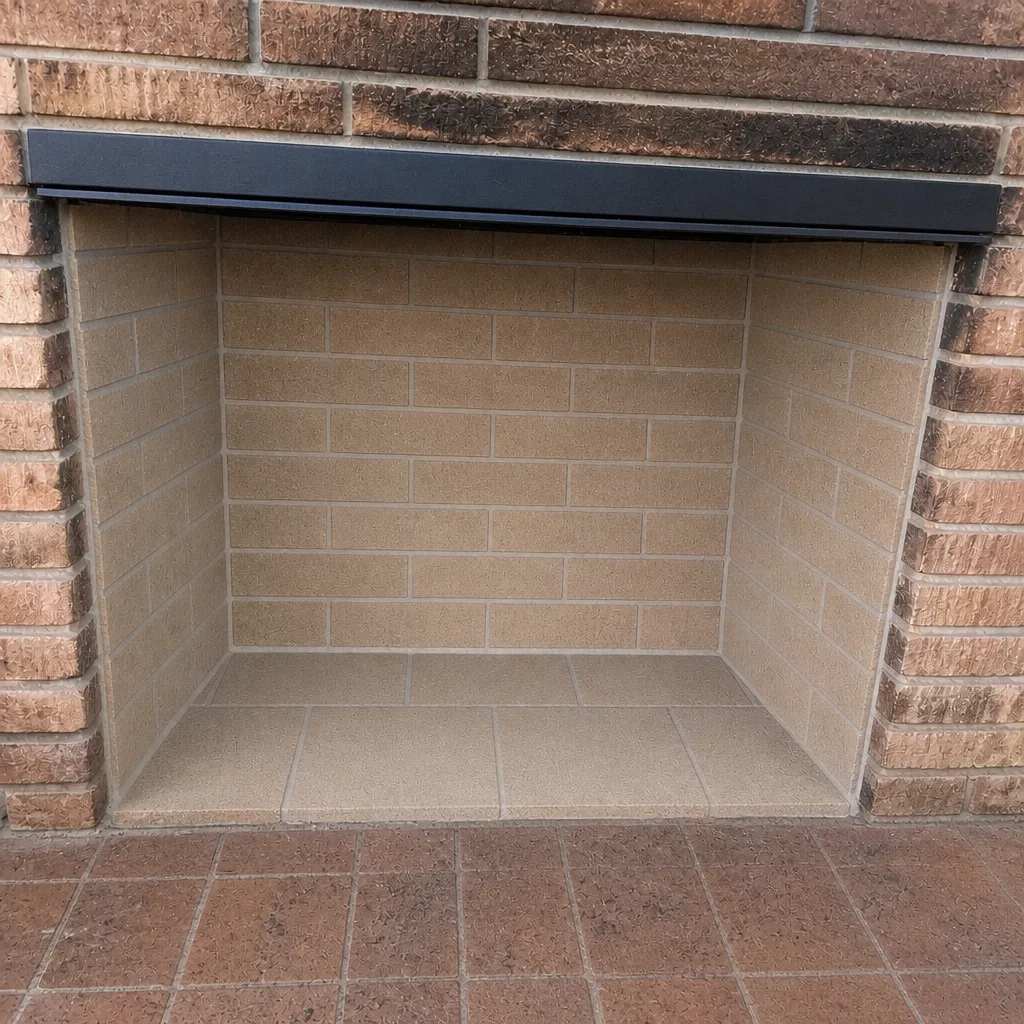 After
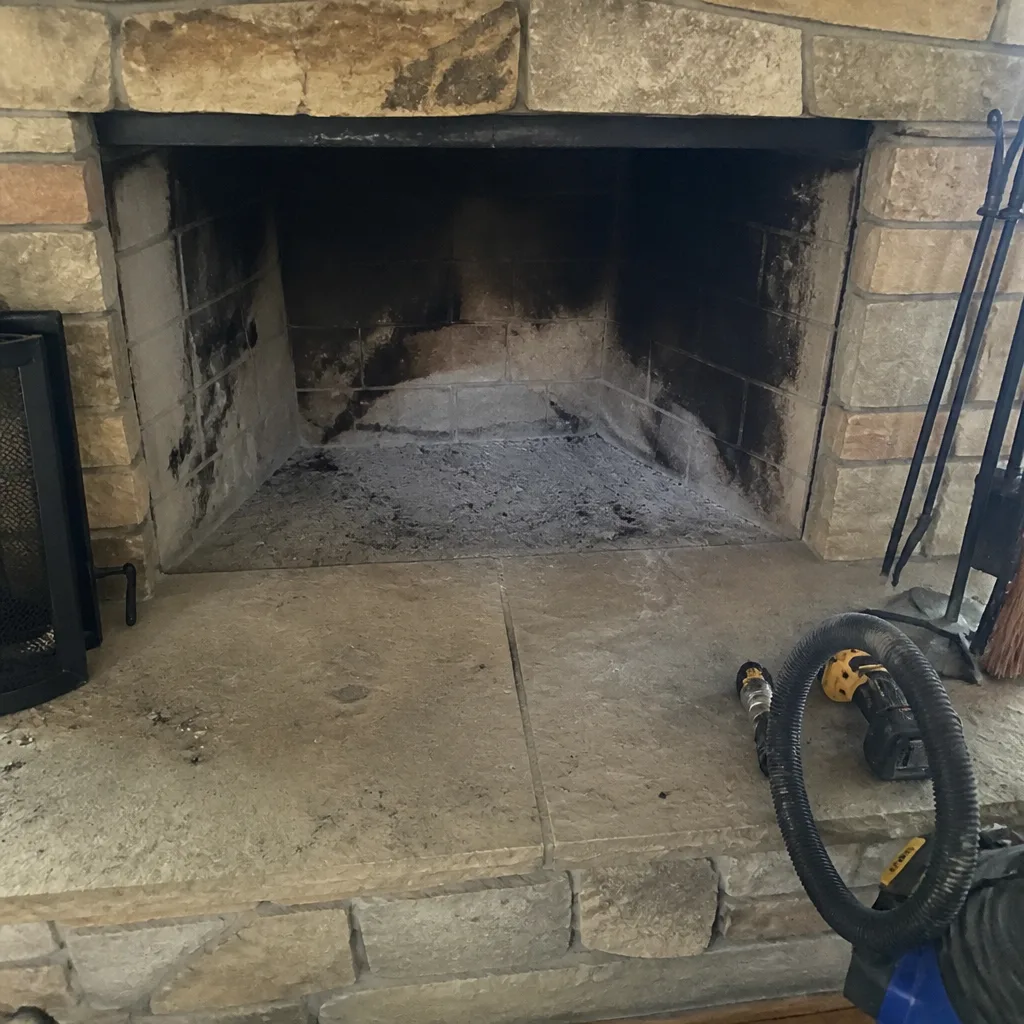 Before
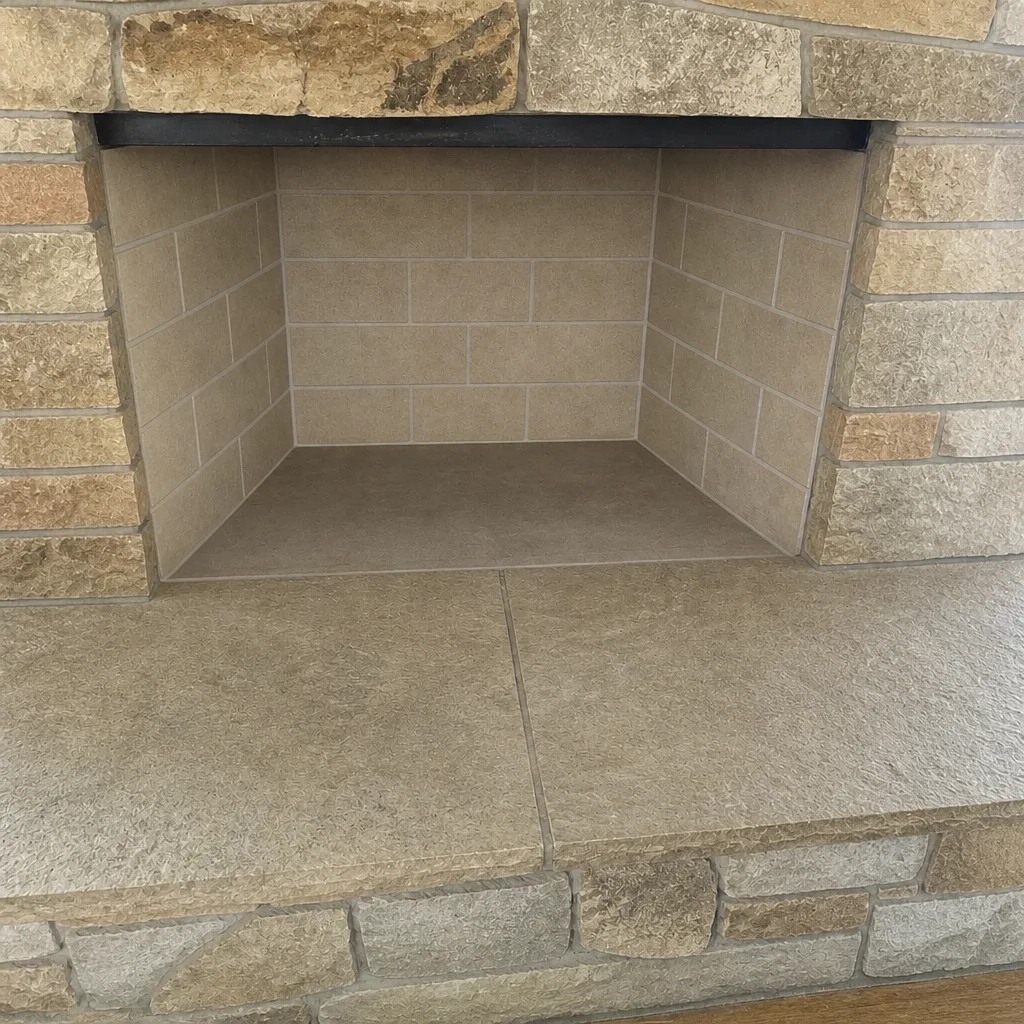 After
When to Call a Professional
Call for a professional chimney inspection in Saddle Rock if any of the following is true: you’ve had a chimney fire, even a small one; your CO detector has alarmed while a fire was burning; you’ve noticed smoke in the room with the fireplace; your cap is loose or missing; the crown has visible cracks; you haven’t had the chimney inspected in the last twelve months; or you’re buying or selling a home with a wood-burning or gas fireplace. Any of those is a legitimate reason to have a chimney specialist look. Chimney Sweep Saddle Rock offers free estimates in Saddle Rock – call (833) 513-8273. We answer 24/7. Fast dispatch from 7am to 7pm, Sunday through Friday.
Frequently Asked Questions
A chimney fire typically sounds like a low roar or rumble – many homeowners describe it as a freight train or a distant jet coming from the chimney chase. You may also hear ticking or tapping as creosote flakes and burns. If you hear any of those sounds while a fire is burning, get everyone out and call 911 from outside.
Put at least one CO detector in the same room as the fireplace, not only in the hallway outside the bedrooms. Chimney backdraft enters in the room with the fireplace first, and that’s where a detector will pick it up earliest. Add one in any room sharing a wall with the chimney chase if you can.
Yes. Any chimney fire or chimney-related event calls for a Level 2 inspection, which includes a camera scan of the flue interior and a full check of the cap, crown, and firebox. A visual check from the firebox is not enough – creosote fires routinely cause liner damage that you can’t see from below.
Yes, and that’s the most common scenario. A creosote fire can spall the inner face of a clay tile, open hairline cracks into the surrounding masonry, or delaminate a metal liner – all without any visible change from the firebox. That hidden damage is why the camera scan matters. Call (833) 513-8273 for an inspection – estimates are free.
Keep the written inspection report, the photos from the camera scan, and any repair recommendations. Keep the last two or three reports if you have them. That record is what your insurer or fire marshal will ask for after a chimney-related incident, and it also gives you a baseline for future inspections.
Once a year for most wood-burning fireplaces, and more often if you burn heavily through the winter. Gas fireplaces should still be inspected annually even though they don’t produce creosote. The sweep clears the creosote and the inspection verifies the cap, crown, and liner at the same time. Call (833) 513-8273 for a free estimate – we’ll tell you exactly what your chimney needs.
The Bottom Line
Chimney emergencies come in three flavors – fire, carbon monoxide, and structural failure – and each has its own warning signs, its own response, and its own prevention window. Know the three sounds and smells of a chimney fire. Put a CO detector in the room with the fireplace, not just the hallway. Do a Level 2 inspection after any chimney event, with a camera scan of the flue interior, because a visual check is not enough. Locate your damper, cleanout, and roof access before you need them. And keep your inspection report on file, because that paper trail is what makes an insurance claim or a fire marshal review go smoothly. The annual inspection in Saddle Rock is where all three prevention windows meet, and it’s the work we do.
Call (833) 513-8273 for a free estimate. We answer 24/7. Fast dispatch from 7am to 7pm, Sunday through Friday.
Written by the team at Chimney Sweep Saddle Rock.